by Christie Purifoy | Mar 17, 2015 | children, Faith, grief, Lent, Scripture, Uncategorized, Winter
“you will be called Repairer of Broken Walls”
Isaiah 58:12
*
*
We have arrived at those muddy, brown days between winter and spring. When I cross the yard to the chicken coop, it feels as if I am walking on a sponge. We have had a few warmer days and a few sunnier days, but it is not yet clear to me if the damage of this winter can be undone.
Somehow I find it harder to believe in spring the closer it comes.
*
My daughter is learning about the Holocaust in school. Every afternoon she shows me some newly acquired fact, as if she half believes that this time, this time, I will contradict her teacher. I will say, No, no, it wasn’t as bad as that. Instead, I only ever say yes. Yes, it’s true.
Here is what she does not say: How do you go on living in a world where such things have happened? Still happen?
Here is what I do not say: I don’t know.
*
As a writer, I pick up the pieces. Even the ugly, broken pieces. I arrange them and rearrange them, and I search for hidden meaning. I find patterns, and they always say the same thing. They say, Look! Here is something beautiful. Here is good news.
Except that recently, I can’t seem to find the pattern. The broken pieces remain only broken pieces.
They are so many. They are so sharp.
*
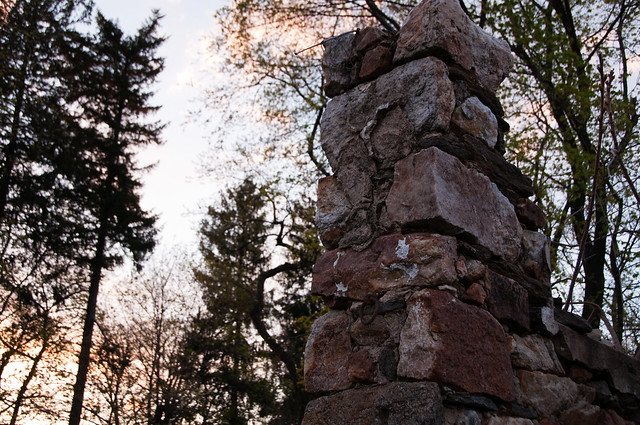
Because it is Lent, we begin each Sunday service with The Decalogue rather than a hymn. We hear the list of God’s ten commands, and they are like stones that form a wall that enclose a garden.
Gardens grow best within the shelter of a wall, but we have torn down the wall with our own hands.
*
Perhaps we must first listen to the bad news if we hope ever to hear the good.
Perhaps it is sorrow for all the broken pieces and all the tumbled stones that gives us courage to stand up. To rise up, leave the sackcloth and ashes, and go searching for our new name.
*
by Christie Purifoy | Oct 2, 2014 | Autumn, Faith, Jesus, Scripture, Seasons, Stories, Uncategorized
Autumn is announced by the seedling trees. The baby trees. They are the first to abandon their green in favor of orange or red or yellow.
Driving these country roads, they are like lit matches. Small, flickering flames against the general greens and faded browns of early autumn.
They are children embracing the arrival of something new. They wear their faith like Joseph’s multi-colored coat, and we cannot look away. Soon, even the staid elders will shake off their summer sleep.
Until they blaze.
*

Truly I tell you, unless you change and become like little children, you will never enter the kingdom of heaven. (Matthew 18:3)
I observed the brilliant, baby trees, and I immediately thought of Jesus’s words. I imagined I could write out the connection. That I could find some moral in what I had seen.
But trees are living things. They are not convenient object lessons.
Maybe they could be parables. Easy to decode but almost impossible to comprehend. Truth so tall and deep, it avoids our grasp, seeking instead the deep well of our hearts.
I will open my mouth in parables, I will utter things hidden since the creation of the world. (Matthew 13:34)
Yesterday, I saw a strange sight. Walking to shut up the chickens for the night, I saw a line of geese heading southeast. They were black silhouettes against the slate gray backdrop of the sky.
I stood perfectly still watching them, captured by some mystery that wasn’t immediately apparent. Then it came to me in two parts.
First, the geese traveled in a single diagonal line, but there was only emptiness where the other half of the V should have been. Was this a picture of loss and grief? Or only the notice of job vacancies in the sky?
Second, they were quiet. I could hear nothing. No flap of wings, no honking calls.
Be silent, all flesh, before the Lord, for he has roused himself from his holy dwelling. (Zechariah 2:13)
I read my Bible, and I watch the trees. I stop to consider the birds. I am learning to collect hidden things. To store them up for the winter day of my need.
And on that day I will know exactly what it means to be a young tree wearing a blaze of color.
I will understand just how much depends upon chasing the far horizon in complete silence.
*
by Christie Purifoy | Sep 17, 2014 | Autumn, river, Scripture, Seasons, Uncategorized, Writing
Some beginnings are brown. There is nothing fresh or new about them.
Take autumn, for instance. In my mind, it begins with the first gilded edge on the giant magnolia tree. In my mind, it begins with the weeping willow’s coppery sheen.
Apparently, my mind is wrong. Has been wrong for all these years. Because autumn is beginning, and it is brown.
It is brown where the seed pods rattle in the flowerbeds. It is brown where the first leaves have fallen and turned crispy. They were overeager. They could not wait for their orange or red transformation. The reward for their impatience is to be mistaken for dull oak leaves rather than the vivid maples they are.
*
*
Some have asked how the book writing is progressing. I tell them all the same thing. I tell them I have written a lot of words, and I despise every one of them.
The response to my honesty has been, universally, a wide-eyed look of concern. I appreciate the concern. It draws out the nurturer in me. I want to pat each friend on the hand, I want to pat myself on the hand, and say, “There, there. I think it will be okay. It is only that some beginnings are brown.”
*
*
Beginnings rarely make a clean break with endings. The two are usually muddled together.
It can all be a bit discouraging without eyes to see. I am praying for eyes to see.
Forget the former things; do not dwell on the past. See, I am doing a new thing! Now it springs up; do you not perceive it? (Isaiah 43:18-19)
Do not dwell on the past.
What relief there is in those words. How light is their burden.
Light enough that we are able to keep walking. Perhaps even with a spring in our step, which, as you know, is a sign of anticipation. We know we are closer.
Every day brings us closer to that place where the water runs fast and clear.
*

*
by Christie Purifoy | Aug 22, 2014 | Blog, Books, Desire, Dreams, Faith, God's promises, Scripture, Uncategorized, Waiting, Writing
“… unless a kernel of wheat falls to the ground and dies, it remains only a single seed. But if it dies, it produces many seeds.”
John 12:24
***
It is the dream-come-true moment that lodges itself in our memories.
The day the baby was born. Or the day you wore the cap and gown. Or the day you moved in.
It isn’t that you’ve forgotten. It is only that time does heal and dreams-come-true are complicated. They ask so much of you. When you are changing diapers in the night or ripping out weeds for a new garden you do not have much energy to spare for looking back.
Which may be why I have written so much about dreams-come-true and so little of letting them die.
Because no dream lives that has not yet died.
***
***
Some call this surrender. They describe it as letting go. Giving back to God. Release.
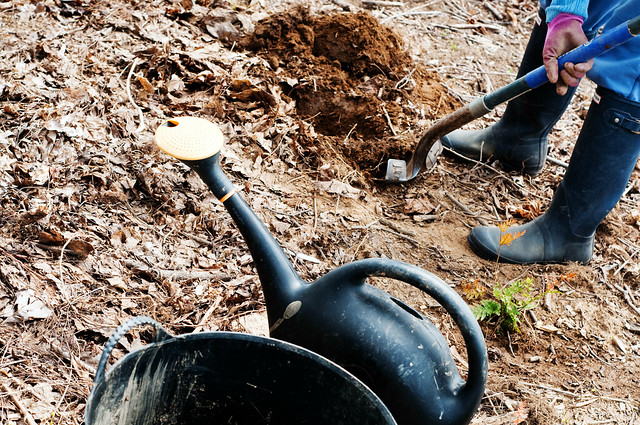
I prefer to call it planting.
First there is the dream. It seems to have come at once from somewhere deep within and somewhere so far beyond yourself that the only explanation is divine. God has whispered, and your eyes are now open.
That is the seed.
Then comes the next day. Which turns out to be not all that different from the day before. The dream appeared to be so real, so startling and immediate, but life seems not to have noticed. Life is much the same as ever.
We each have our own way of living these days. Some of us wrestle and rage. We cry and we grip and we will not let go until, utterly spent, we drop the seed and we bury it.
Others of us begin to doubt almost immediately. I can live without this, we say. Maybe it was never meant to be, we tell ourselves.
This is how dreams die. How they are buried in dark dirt.
This is how we live with dry bones.
***
Waking up is difficult. Resurrection, even of the figurative sort, can be painful.
T.S. Eliot warned us:
April is the cruelest month, breeding
Lilacs out of the dead land, mixing
Memory and desire, stirring
Dull roots with spring rain.
It is painful to dream again. To risk a broken heart. To walk through a valley of dry bones and say I believe.
But, oh friends, I am convinced. It is the only way to live.
***
I looked, and tendons and flesh appeared on them and skin covered them, but there was no breath in them. … Come from the four winds, O breath, and breathe into these slain, that they may live.
On Monday, an envelope stuffed with papers arrived in my mailbox. I knew it was coming, but I still caught my breath when I saw it there.
It sat on the kitchen table while we gathered groceries and medications and swimsuits. School begins on Monday, but we were squeezing in one small family vacation before calling summer quits.
Late at night, with our bags packed and our kids in their beds, I read the papers. I signed the papers. There was no time to visit the post office, so I packed the papers with everything else the next morning.
We drove north toward Ithaca, New York. The Finger Lakes, they call them. It’s a storybook landscape of mountains and water and red Dutch-style barns. The kind of landscape I found only in books when I was a child growing up in Texas.
Just the right landscape for a dream-come-true.
Now that I’ve left those papers at a post office in Ithaca I can tell you this:
Dry bones do live and this autumn and winter I’ll be writing a book.
I’ll be writing a book for Revell, a division of Baker Publishing Group.
This is what the Sovereign Lord says to these bones: I will make breath enter you, and you will come to life. … Then you will know that I am the Lord.
And I pray, Let it be to me according to your word.
Let it be, let it be, let it be.
***
***
by Christie Purifoy | Aug 18, 2014 | Chicago, Community, Jesus, Scripture, Uncategorized
It must have happened eight or nine years ago. One particular day about midway through the decade we spent in that southside Chicago neighborhood.
I know this because my firstborn will soon turn eleven, but that day her stout little legs just managed to reach the sidewalk. We were sitting with my husband and a friend on the front steps of our apartment building.
Our little girl hopped up and ran a short burst down the sidewalk, and I heard him. Our friend. He had his eyes on our daughter when he whispered to my husband,
She isn’t afraid of me.
And I heard his surprise and his pleasure.
***
Our friend was black, and I wish I could say that I didn’t understand his words. That it took me a moment to grasp what he had said. But I understood instantly, and instantly I was ashamed. Ashamed that what should have been a given, a starting point, was, instead, a gift.
***
It would be simpler if I could say that our friend did not deserve fear and end my story there. If I could outline in a few easy words the injustice of a culture that perpetuates the association between black men and danger. Because it is deeply unjust.
I could remind you that he was our friend. I could tell you that he wrote poetry and loved his children, and we could share the satisfaction of our outrage.
But the full story is more complicated.
Yes, he was our friend, but he was unemployed. He was sometimes homeless. He was a recovering drug addict, and he had only recently been released from prison.
And now when I tell you that he used to hang out with my husband in the living room while in the kitchen my daughter and I filled a bag with food for his children, you might wonder if we should have been afraid.
***
When I am feeling especially desperate I tend to pray this: Jesus, where are you?
I pray these words as if I don’t know the answer, but today I am remembering the answer he has already given. In Matthew 25 he tells us where to look.
If you are seeking Christ look for the one who is hungry. The one who is thirsty. Listen for the stranger knocking at your door. Watch for the criminal, the one who is or has been in prison.
In other words, searching for Christ is anything but safe.
Our king has aligned himself with the suffering, and suffering is messy. Wounded people can be explosive and ugly in their anger and in their pain.
They might say hurtful things.
They might even throw Molotov cocktails.
***
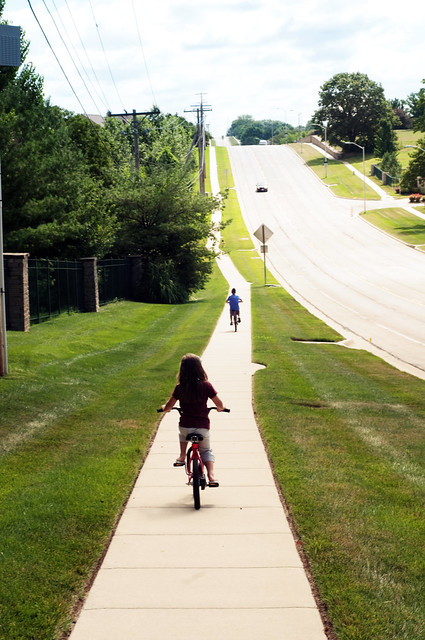
My Pennsylvania neighborhood is peaceful and green. I am sure Jesus meets with me here. I am convinced he makes a home with us even on ordinary, suburban streets.
But I am sensing an invitation to travel somewhere else. To a place where suffering is no longer polite and hidden but erupting in deeply messy ways. Perhaps it is only a figurative journey, a journey I will make in my thoughts and prayers and in my storytelling, yet I still hesitate.
I hear Jesus speaking the words he once spoke to Thomas. I hear him saying Put your finger here; see my hands. Reach out your hand and put it into my side.
I always imagined it to be a straightforward request. Reach out. Touch. Now I see that in reaching out we might be carried farther than we ever intended. Our reaching might draw us right out of our circles of peaceful green and on toward wounded people in troubled places.
Not because we have solutions. Not because we know what to do. Or even what to say.
Only because we are following a wounded Lord. And we want to be where he is.
***
by Christie Purifoy | Aug 13, 2014 | Autumn, Faith, Grateful, grief, healing, Joy, motherhood, Pregnancy, Scripture, Seasons, Stories, Summer, Uncategorized
The world is loud and terrible this summer. It is as if the entire planet has tilted on its axis and dipped us all in nightmare.
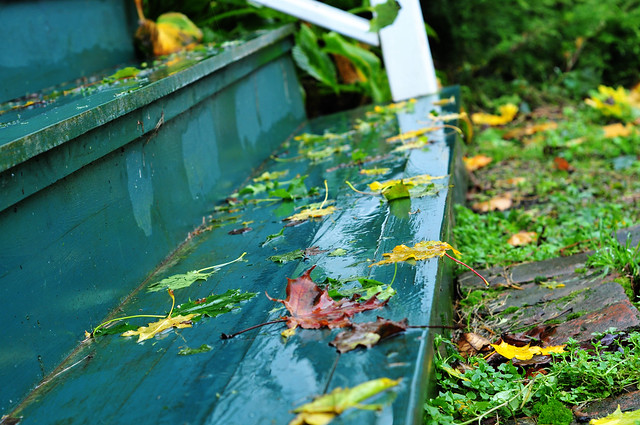
The grass outside my bedroom window is dotted with yellow maple leaves. I don’t know if this is because summer is already ending or because the largest and oldest of the maple trees is dying. Perhaps it is both.
Land and growing things are broken, nations are broken, bodies and minds are broken. And we respond by shouting at one another.
I indulge in shouting some days, but, mostly, I respond by retreating into silence.
When my children explode over cracked Legos and the last popsicle, I struggle to stay with them in the noise. I want only to slip away, to climb the steps to my bedroom, to sit in the curve of the bow window noticing yellow leaves on the lawn outside.
The world grows louder, and I grow quieter. Sometimes, this feels like wisdom, but I know it is also weakness.
It requires strength to share our stories. To risk being misunderstood.
It requires faith to tell small stories. To believe that what seems to be inadequate is of value.
When my fourth child was born, my body struggled to make milk for her. The hormonal peaks and valleys of that process seemed to switch a lever in my brain.
I became depressed.
I had so many reasons to be happy, but depression sucked all emotion from my mind and filled the emptiness with anxiety. I can remember sitting in my comfortable, soft rocking chair, holding my baby, and trying to remember why I had once cared about babies or repairing old farmhouses or ordering seeds for the spring garden or anything at all. I could no longer remember why it mattered if any of us ever got out of bed.
When I stopped trying to nurse my baby, and the last of my milk dried up, the depression lifted. A severe mercy.
It meant that I knew happiness again.
It meant that I knew sadness again.
Healing looked like a renewed capacity for both joy and sorrow.
This morning I read these words from Psalm 105:
Give thanks to the Lord, call on his name;
make known among the nations what he has done.
Sing to him, sing praise to him;
tell of all his wonderful acts.
And I remembered what had happened to me after my daughter’s birth and knew that I did have a song of praise.
Thank you, Lord. Thank you for healing me enough to grieve.