by Christie Purifoy | Jun 20, 2011 | Books, Family, Food, Religion
Most (perhaps all) experts would advise aspiring writers to “just say no” to exclamation points. They are abused and overused. They make our writing appear amateur. There is seldom a good enough reason to use an exclamation point.
And yet . . . I choose to believe that the story I am writing today deserves an exclamation point. The title of this post may have unleashed sugary visions in your mind, but I’ll tell you here at the beginning that this isn’t really a story about sugar. It’s about bread. And it is exclamation-point worthy.
On Saturday, my almost-five-year-old boy tasted his first doughnut. One taste and his eyes were shining. Like this:

(photo by yours truly)
This boy is allergic to a handful of the most basic ingredients of an American childhood (dairy, wheat, eggs, and peanuts). Thanks to a recent discovery (the phenomenal vegan, gluten-free bakery cookbook Babycakes Covers the Classics) my son tasted a doughnut for the very first time.
Even better, we all tasted them. We all loved them. In fact, the leftovers are calling to me from the freezer drawer right now.
It’s a far cry from our usual breakfast routine. My husband makes dairy-free, wheat-free pancakes and waffles, but they will always taste just a little funny to anyone accustomed to bleached, all-purpose wheat flour. Most days, the boy enjoys his breakfast, while the father begins making something else for everyone else.
Strictly speaking, our family never breaks bread together. We break bread alongside one another. The good loaf for the four of us, the not-quite-right imposter for our oldest son, the middle child.
In our family, we often say ruefully that if we only ate like this boy we would all be so healthy. Some meals, this is true, but, deep down, I have always felt as if my boy’s diet has no heart. Something essential seems missing. I love the smell of yeasty bread baking, and I definitely prefer homemade pizza crust. The bread-like lumps that sit on the shelves at Whole Foods, heavy with ingredients like tapioca and bamboo (I am not kidding), strike me cold.
My son rarely complains. Some of those lumps, he actually likes. Only occasionally, does he seem to mind. “Isn’t there any bread for me?” he might ask as his sister dunks a baguette in her soup, and I try to pacify him with a few rice crackers.
In my head, I know that my son doesn’t need bread. His body seems to be growing pretty well without it. In my heart, I’m not so sure. What I want to give him, what I long to give him, is the thing I gave him on Saturday. Bread made with my own hands to nourish him: body and soul. Factory-made bamboo substitutes need not apply. They cannot do the job.
I am about to make a leap here (from nutrition to religion), but, honestly, I don’t believe it’s that much of a leap. I love symbols and metaphors, but this is more real than those. Our pastor reminded us this weekend that the Hebrew word for bread is also used to speak of God’s presence. And that is what I hunger for. That is what I want to give my son.
Depending on our culture, we might discover it in a corn tortilla or a yeasty baguette, but I know it’s available for all of us, whether we are breaking bread at home or in a church. It’s Life. Body, heart, mind, and soul. All of it.
Jesus said, “I am the bread of life. He who comes to me will never go hungry, and he who believes in me will never be thirsty” (John 6:35). Maybe when he spoke these words they were only a metaphor. However, when Jesus walked all the way through death and out into life, his words became much more than that. And if we’re wondering what to do, how exactly to access this life without hunger and thirst, the answer, I think, is so much less complicated and exclusionary than we often make it: Eat! And after, maybe a simple thank-you.
“He makes grass grow for the cattle, and plants for man to cultivate – bringing forth food from the earth: wine that gladdens the heart of man, oil to make his face shine, and bread that sustains his heart.”
(Psalm 104:15)
by Christie Purifoy | Jun 17, 2011 | Florida, prayer, Religion
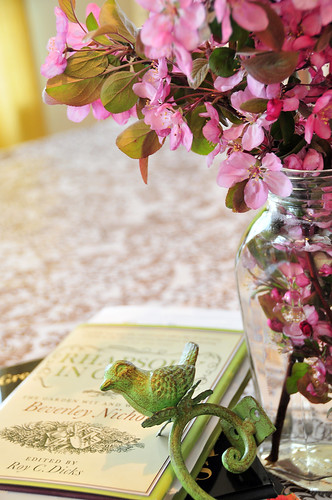
Trees are dying, fires are burning, and I’ve been praying for rain. On Monday, it rained. A good, soaking rain. I went to bed and imagined the smoke being scrubbed from the air.
On Tuesday, we woke up to find that the smoke was much, much worse. “What happened,” we wondered. Hadn’t the rain done its job? Throughout the day, the smoke seemed to grow denser, heavier, and by the late afternoon our car was coated in a fine dusting of metallic ash.
It turns out that a neighbor of ours is something of an amateur meteorologist. While we traded complaints about sore throats and burning eyes, he explained that the rain had been part of a low-pressure system. Where air pressure is low, new air rushes in. The rain that seemed such a good thing was like an invitation to the fires. The rain stopped, and the smoke poured in.
Lately, I’ve been thinking I may need to be more specific in my prayers. I prayed for rain, but I didn’t intend to pray for smoke. In another example, I’ve lately been praying that we could live nearer our families. My sister, a military wife, then shared that they would be moving to northwestern Florida, only (only!) a six-hour drive away. They had been asked to prioritize three choices for their move, and Florida wasn’t one of those choices. I realized that I’d imagined God moving us out of Florida in order to be near family, but, instead, God moved my sister and her family here. I’m grateful, but it isn’t really what I’d hoped for.
My prayer for rain, and the unforeseen consequences of that rain, remind me how limited my vision is. Prayer is such a mystery. I’m glad that we are able to participate in God’s work in the world through prayer. I could tell beautiful stories of answered prayers in my life and the lives of my family and friends. But, I’m also glad to know that the God who created the universe isn’t some sort of mechanical robot: I push his buttons with prayer and wait for the expected result. He’s so much more alive than that. So much more dangerous. So much more loving. To use C. S. Lewis’s word, he isn’t a “tame” God.
And yet . . . sometimes my hopes, dreams, and desires feel like fragile little birds. They don’t seem able to withstand the force of some fierce, lion-God stomping around on them. Considering these dreams, I feel like both the mother and the baby bird. I am tender and nurturing toward these parts of myself. I am also very, very vulnerable. Can the God who holds the Big Picture be trusted with hopes that are so small and easily crushed?
“Even the sparrow has found a home, and the swallow a nest for herself, where she may have her young – a place near your altar, O Lord Almighty, my King and my God.”
(Psalm 84:3)
by Christie Purifoy | Jun 13, 2011 | book of quotations, Books, Religion
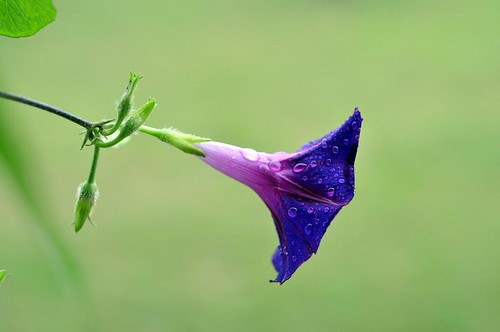
I recently jotted down a few lines from Barbara Brown Taylor’s Leaving Church: A Memoir of Faith. Describing the honeysuckle and magnolia blossoms in her Atlanta neighborhood, she writes: “All these earthly goods were medicine for what ailed me, evidence that the same God who had breathed the world into being was still breathing.”
Generally, I imagine the act of divine creation as an over and done deal. God spoke. God breathed. Past tense.
Taylor’s words offer the best kind of literary shock: the shock of confronting a truth we know but have never really considered. A truth that suddenly appears, not only obvious, but vitally important.
Reading these few words, everything in me responds, “Yes, of course.” For creation, the very breath of God, continues to unfurl every moment.
I hear a whispered breath in the utterly unique daily bloom of my morning glory vine. Each morning a new flower or two. There is also my own breath. Inhalation and exhalation require no act of decision or effort on my part. I can’t claim them. They are given to me, again and again, whether I think of them or not.
This moment by moment gift of breath would seem to be unadulterated good news, but, for me, it is also a source of fear. I grew up with asthma, can still feel that whistling wheeze in my chest, and when my own son struggles to breathe I feel, not only empathy, but fear. I can’t take breathing for granted, and my personal phobias are all rooted in this fact. Some people fear spiders or heights. For me, it’s something innocuous like scuba diving. Each breath measured from a tank, and a weight of water on my shoulders: this is someone’s idea of a vacation, but it feels like a nightmare to me.
It is only when I consider the character of the gift-giver (He is good. He is love. His plans are not to harm me.), that I can trade fear for peace. I cannot provide for myself the one thing I need most: breath. Fortunately, the one who can knows my needs better than I do and loves me more than I love myself. Even better, His love for my son swallows my own puny love. I can administer an inhaler and an epi-pen, but the God who made us, who loves us, who holds us, can breathe life.
In response, I breathe back my thanksgiving. Why do we sing our praises to God? As a friend(and talented musician) once shared with our church, we sing in order to give back to God that which he first gave us. Breath.
“And the Lord God formed man of the dust of the ground, and breathed into his nostrils the breath of life; and man became a living soul”
(Genesis 2: 7).
by Christie Purifoy | Jun 7, 2011 | Religion, Seasons

For several weeks, I have thought of barbecue every time I stepped outside my door. It’s a smell that burns, and a fog that makes my eyes smart. It isn’t my neighbor’s backyard grill (though that smell is common year-round. Really. This year we grilled pizzas on Christmas Eve).
It’s wildfire.
When I first moved to Florida in late spring one year ago, I worried about the summer. I grew up in the heat and humidity of central Texas, but I’d always hated it. I’d also escaped the land of six-month summers more than a decade before, and I wasn’t sure I could handle it again.
Fortunately, it never got as hot as I had feared. It turns out that living near the coast really does make a difference. It may get very warm and very humid and stay that way for many months, but it’s always breezy and, best of all, nearly every afternoon the humidity ushers in a spectacular thunderstorm. And then . . . there are rainbows.
Sometime around last August, the thunderstorms stopped. The meteorologists on the radio talked about a dry spell. They kept talking about it, but I stopped paying attention as the temperatures cooled, and I enjoyed pulling out my sweaters while keeping my snow boots packed away. Now they talk about drought, and I don’t have to listen to them to know what they’re talking about. I can see it for myself. I can smell it, too.
The retention pond behind my house has sunk within itself, and muddy banks have grown up around it. The palms and palmettos are fading from green to gold. And there is smoke. Some days I won’t let the kids go outside because the haze of it burns my throat.
I pray for rain. My livelihood doesn’t depend on it (as it does for a farmer in Africa). My home isn’t threatened (as so many are, even now, in Arizona). Still, I pray for rain.
I pray for rain because the zinnias I planted need help. I pray for rain because a beautiful magnolia tree on my street is dying.
I pray for rain because I seek the face of a God who first revealed himself as Love to a people living in a desert. We were made, each of us, to seek the source of rain, of rivers, of streams and creeks and oceans.
I pray for rain, and I wait for the fulfillment of so many promises.
“A fountain will flow out of the Lord’s house and will water the valley of acacias” (Joel 3: 18).
“Water will gush forth in the wilderness and streams in the desert. The burning sand will become a pool, the thirsty ground bubbling springs” (Isaiah 35: 6,7).
"He sends you abundant showers, both autumn and spring rains, as before. . . . and you will praise the name of the Lord your God, who has worked wonders for you" (Joel 2: 23, 26).
by Christie Purifoy | Jun 3, 2011 | Religion, Seasons
Do you know what a new moon looks like? Of course, I do, you’re probably thinking. Until two days ago, I would have thought exactly the same, but I wouldn’t really have been seeing a new moon in my head.
Because I have been in the middle of one book (or six) pretty much ever since I picked up my first kindergarten reader, many of the ideas floating around in my head are attached to letters but not pictures. For example, having read a towering stack of nineteenth-century British novels, I have the word rookery firmly planted in my head. However, I have no solid picture to go along with it. Instead, when I happen upon this word, maybe in Jane Eyre, I see the letters r-o-o-k-e-r-y with a vague image of big black birds sitting on rocks. Which is funny, really, because a rookery shares nothing with rocks but “r,” “o,” and “k.” Though, I had to look it up in wikipedia to be sure even of that.
So, new moon. Two days ago, I googled the phases of the moon. If you’re following a train of thought and sitting in front of a computer (or smartphone, I suppose) it’s amazing how far you can follow said train. My thought began with a complaint and a worry.
I have a two-year-old, and he is a terrible sleeper. Always has been. Which means that my husband and I haven’t slept well in more than two years (because those last few months of pregnancy are never great for sleep, either). Lately, this boy has taken to creeping into our bedroom several times each night and trying to sleep on the floor beside our bed. It’s a little sad and a little cute, but, mostly, it’s exhausting because the two-year-old can’t actually fall back to sleep on our floor, and we can’t fall back to sleep with the loud sucking sounds of his pacifier. Also, I’ve been worried that I’ll get up in the night, not realize he’s there, and step on him. Did I mention that our bedroom has been very, very dark lately? We have transom windows that let in a lot of moonlight, but recently there’s been no light at all and why has there been no light? . . . well, I started googling. The first page that popped up had a huge image of Wednesday night’s moon. A new moon.
This is what a new moon looks like: black, empty, nothing. Somewhere in my head I suppose I knew that. However, it’s the word new that throws me off. New suggests promise, possibility, beginnings. New things should be light, bright, and shimmery. Shouldn’t they? Yet a new moon looks like a black hole. The opposite of promising. The opposite of fresh. The opposite of, well, new.
Staring at that shadowy, black circle where a moon should be, I felt both surprised and encouraged. I’ve been waiting and watching and longing for new things. Months ago, I read these words and felt a promise for my own life: “See, I am doing a new thing! Now it springs up; do you not perceive it?” (Isaiah 43: 19). Some days, I did perceive it. Lately, not so much. I read David’s confession that God lifted him “out of the mud and mire” and “put a new song” in his mouth. I too want a “new song,” but I’ve seen so few signs of it. The landscape of my life looks a little dark. Mostly empty.
Seeing rightly what a new moon is, I recall what I do know: new things start out small. New things begin growing in darkness. In their earliest days, new things look a lot like nothing.
Today, I am choosing to believe that what looks like emptiness and nothingness to me is actually the most promising sign of something new. It is fertile ground for the new thing I choose to believe that God is doing.
I’m afraid I’m mixing metaphors here (from sky to earth), but the new moon reminds me of nothing more than a bed of fertile soil. It looks like absolutely nothing. It looks like darkness and emptiness. It isn’t.
“Those who sow in tears will reap with songs of joy. He who goes out weeping, carrying seed to sow, will return with songs of joy, carrying sheaves with him” (Psalm 126: 5,6).

