by Christie Purifoy | Nov 14, 2011 | Faith, Poetry, prayer, Uncategorized
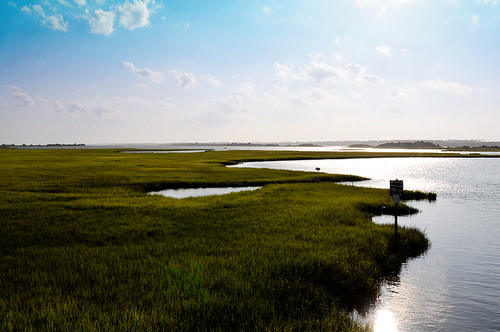
For you on this Monday: a sonnet from Irish farmer-turned-poet Patrick Kavanaugh.
I suppose there are those who might find heresy in this poem. “Pantheism,” they would say.
I don’t defend the idea. If God is everything and everything is God then what good is God, I wonder? And yet, I do not think that this is a heresy strong enough to deserve much disapproval (at least not today in the United States). We have silenced nature very effectively with our parking lots and our strip malls, our corporate ladders and our electronic shadow selves.
This poem reminds me to listen for the voice of God whispering all around.
I can’t prove that His is the voice you hear in water and wind. But, to borrow Kavanaugh’s words, some arguments aren’t meant to be proven.
Canal Bank Walk
Leafy-with-love banks and the green waters of the canal
Pouring redemption for me, that I do
The will of God, wallow in the habitual, the banal,
Grow with nature again as before I grew.
The bright stick trapped, the breeze adding a third
Party to the couple kissing on an old seat,
And a bird gathering materials for the nest for the Word
Eloquently new and abandoned to its delirious beat.
O unworn world enrapture me, encapture me in a web
Of fabulous grass and eternal voices by a beech,
Feed the gaping need of my senses, give me ad lib
To pray unselfconsciously with overflowing speech
For this soul needs to be honoured with a new dress woven
From green and blue things and arguments that cannot be proven.
– Patrick Kavanaugh
by Christie Purifoy | Nov 7, 2011 | Poetry, prayer, Seasons
This poem is well suited to November’s darker days.
The changing of the clocks seems like an example of humanity’s authority over its own environment, and yet it always reminds me just how out-of-our-control day and night, light and dark truly are. The days will grow shorter, no matter our efforts or anxieties. Nature will begin to die. We will too, come to that.
This poem suggests that embracing the inevitable (whether it be the changing of the seasons or death itself) need not be an act of despair. It can be an act of great trust.
Technically, I should call this a pastoral poem, but, to me, it always reads more like prayer.
Let Evening Come
Let the light of late afternoon
shine through chinks in the barn, moving
up the bales as the sun moves down.
Let the cricket take up chafing
as a woman takes up her needles
and her yarn. Let evening come.
Let dew collect on the hoe abandoned
in long grass. Let the stars appear
and the moon disclose her silver horn.
Let the fox go back to its sandy den.
Let the wind die down. Let the shed
go black inside. Let evening come.
To the bottle in the ditch, to the scoop
in the oats, to air in the lung
let evening come.
Let it come, as it will, and don’t
be afraid. God does not leave us
comfortless, so let evening come.
– Jane Kenyon
by Christie Purifoy | Sep 21, 2011 | Family, poverty, prayer

I’ve always had a tendency to let the mail pile up unopened (which means that we have realized, on more than one occasion, that we’re driving a car that may no longer be insured).
We put systems in place. For instance, a basket for recycling junk mail sits by the front door just beneath a tray for bills. I vow to do a better job, but I never quite keep up with the flurry of paper.
One particular unopened letter had been troubling me for weeks. The return address said Compassion, and “a message from your sponsored child!” was splashed across the envelope. I knew as soon as I pulled it from the mailbox that it was a note from our new Compassion child (I picked him from the lineup because he reminded me of my middle boy). He isn’t the only child we sponsor, so I knew the drill. I would need to write a letter introducing him to our family, and I remembered that it was customary to include a family photo.
It’s the photo’s fault. At least, that’s what I’d like to think.
As soon as I open this letter, I told myself, then I’ll have to add “take and print a family photo” to my to-do list. I felt tired just considering my to-do list, yet my perfectionism wouldn’t let me send a year-old photograph (because our baby boy has changed so much).
And so, I let the letter sit.
I kept spotting it. I noticed it every time I added a few more bills to the now-teetering pile in the tray. The guilt grew with the pile, but I couldn’t get past the need for a photo.
Until yesterday.
I shook my perfectionist, procrastinating self and opened the letter. Immediately, I noticed a small box with the prompt “Please pray for my family.” Within that square were these dictated words: “Please pray that my father finds a job and stops drinking.”
I was devastated. My chest hurt.
A heart-cry in a handful of words: how could I have let it sit unread?
Adding another Compassion child to our monthly giving was a financial stretch for us. However, I’ve found that opening my eyes just a little bit to the rest of the world makes it much harder to justify the ease with which I buy books. Or new boots for my daughter. Or another weekly dance class.
It’s about money. God has his eye on the poor, and I see them too. We both know that He’s given American Christians more than enough to wipe out mountains of misery, if only we would share what has never been ours to begin with.
Yet, believing it was just about money made it easier to leave that letter lying on the tray. Now I know: it’s about money (I say I care about the poor, so I better put my money where my mouth is), and it’s about so much more.
It’s about a small boy. One precious life. Only five years old, and yet he knows things that my own kids have never even imagined. I’m still trying to figure out how to share this prayer request with them. I don’t think that they have ever even heard the word drunk. Let alone seen it.
But this boy . . . oh how my heart aches when I consider what he has seen. What he is seeing even now as I type.
So, I’ll keep writing the checks. But now my checks go out dripping with prayer. Simple, nearly wordless prayers:
Jesus, Carlos, Jesus, Carlos’s daddy, Jesus, Carlos’s mommy, Jesus, Jesus, Jesus.
by Christie Purifoy | Sep 9, 2011 | grief, prayer, Vacation

The two of us. Pre-digital camera. Pre-parenthood. (Just barely) pre-9/11.
I still have the airfare ticket stub marked September 11, 2001. Ten years ago, we didn’t use e-tickets.
Also, there were no smartphones. This partially explains why it isn’t the images of destruction that have stuck with me (images we didn’t get a good look at for nearly a week). It’s the voice of our pilot.
We had just begun our flight from Shannon airport in the west of Ireland home to Chicago, when a deadly-serious voice sounded over the speakers: “Something terrible has happened,” it said. “The FAA has closed all airspace, and we will not be continuing this flight.”
Our plane was grounded in Dublin, a city we hadn’t planned to visit during this, our first, trip to Ireland. Jonathan and I didn’t say anything while we sat on that plane waiting to disembark and collect our luggage packed with dirty laundry. We only looked at each other. Later, we discovered that the image in our minds had been the same: mushroom cloud.
Somehow the actual story was harder to believe. An Irishman with a working cellphone began hearing stories, and they spread quickly from row to row. Attacks? On New York City? Washington D.C.? We shook our heads, said we didn’t believe it.
A few hours later, the airport employee helping me find accommodations in Dublin said it was like something out of a disaster movie. That’s when I understood.
Jonathan left me with the luggage and went searching for a television. He found one at the airport pub. Walking back in my direction, he looked stunned.
I could only pray, “Lord, have mercy.”
For a week, we wandered around the city, feeling as if we might never get home. We guarded our torn ticket stubs as if they were a king’s ransom. We saw confused looks every time we handed them over to another ticketing agent. It was hard for them to understand that when the towers fell we’d been caught in mid-air.
Some small, rational part of our brains kept repeating that if only we knew when we’d be going home we could enjoy this unexpected vacation in Dublin. But we were counting pennies, dodging raindrops, and washing a suitcase full of clothes at the laundromat. It didn’t feel like vacation.
While on vacation we had spent our carefully saved dollars on bed and breakfasts that served Irish porridge with just-picked blackberries. In Dublin, we had a small lumpy bed and were served canned beans on toast. Want to make an American feel wretchedly homesick? Just serve her instant coffee and canned beans on toast.
The world had shifted on its axis, we understood that unimaginable evil could rear its head at any time and in any place, but we couldn’t comfort ourselves with the well-loved and familiar. The flags at half-staff were Irish ones.
After several days in Dublin, we were promised a flight home, but we would need to get back to Shannon airport. We said goodbye to the lumpy bed and took an all-day bus that brought us back across the country, to the place where we had started.
When international airspace reopened, we were there, again, at Shannon airport. They had no record of our names, and we had only our tattered ticket stubs.
We spent one night in the home of a family preparing for their daughter’s wedding. Two stranded German tourists were across the hall from us. The wife said not to worry, we were no bother at all, and she cooked us a big fried breakfast. The husband drove us back to the airport for another try.
At the airport again, we sat on the floor and listened as Aer Lingus employees filled up a plane to Chicago with names called out one by one. When there was exactly one seat left, they called my name. I said that I wouldn’t get on any plane without my husband.
We were wondering whether we could interrupt the wedding weekend with one more night’s stay, when a woman in an official green uniform came running up and shouting, “Does anyone want to go to Baltimore?” We raised our hands. Then, following our guide, we ran.
We also prayed, “God let the doors still be open.”
We weren’t headed home, but it was close enough.
We remembered a friend who lived near D.C. Jonathan, miraculously, remembered his phone number. He picked us up, drove us to his own home, gave us a beautiful, not-at-all lumpy bed.
We managed to find a tiny, out-of-the-way rental car business with one car still on its lot. We took it. Twelve hours later, and one week after 9/11, we slept in our own bed.
“God is our refuge and strength,
an ever-present help in trouble.
Therefore we will not fear, though the earth give way
and the mountains fall into the heart of the sea,
though its waters roar and foam
and the mountains quake with their surging.
There is a river whose streams make glad the city of God,
The holy place where the most High dwells.”
(Psalm 46: 1-4)
by Christie Purifoy | Aug 5, 2011 | allergies, Family, Food, healing, prayer
I fear that too many of us approach prayer with a mental picture of ourselves making a laborious attempt to come before God. Or, maybe we have a picture of ourselves trying and mostly failing to get God’s attention. Either way, the effort is all ours. The distance between heaven and earth appears too big to bridge, and our burdens seem trivial. They are dwarfed by God’s vastness, and they are lost in the cacophony of prayers being made across the planet at any given moment.
I’ve learned that prayer is not about little people waving their puny arms in God’s face. Nor is prayer like my own small voice pushing aside all others in order to make its way into God’s ear.
Rather, prayer is like a river. It is always flowing, and we are not its source. Its source is the Christ “who was raised to life,” for we know that He “is at the right hand of God . . . interceding for us” (Romans 8:34).
To pray is to step into the rushing water.
Even the words we say are not our own. We pray, like Christ, “Abba, Father.” Instead of distance there is the intimacy of family.
And when we have no words? We groan, but even in this we are not alone. Our groan joins that of creation (and who can doubt that creation groans?). Even better, our groans are echoed in God’s own heart, for the Spirit “intercedes for us with groans that words cannot express” (Romans 8:26). Our pain, our uncertainty transformed by God himself into powerful, purposeful prayer.
Quieting myself, I can just hear the sound of the river. It is the sound of One singing over us, and His voice “is like the sound of rushing waters” (Zephaniah 3:17, Revelation 1:15).
How do we find this river? How do we hear its voice? And, most importantly, how do we jump in?
I’m not sure that I’ve figured it out. All I know with certainty is that the river is there and sometimes it finds its way to me.
This week it found many of us at a monthly women’s worship service focused on the arts. Women sang, women danced, women spoke, and women painted. Yes, painted.
Some of us took Sharpie markers and wrote our prayers on one of several large, blank canvases. Of course, I wrote the name of my boy. I wrote the word Fear. I wrote the word Food. And then the painters began to pray and create, and our words were caught up in swirls of color.
By the end of the service, the canvas I had chosen (or the canvas chosen for me?) was covered in a wild rush of water. The artist’s brush had spelled out across it: “The Healing River Flows.”
How could I ever think that my prayer for healing is mine alone? Or even that I am its source?
The source of my prayer is Christ. The same one who gave me these words when I first prayed for a child: “There is a river whose streams make glad the city of God” (Psalm 46:4). Back then, I read those words and knew that my prayer had been answered.
Now I know that “answered” is not really the best word-picture for what sometimes happens when we pray. Instead, it is less like being spoken to and more like being swept away by water that was always already pushing in the direction we longed to go.
We don’t need to fight to get God’s attention. We do need to remember that our Savior with the voice like water has never stopped praying over us.
“Then the angel showed me the river of the water of life, as clear as crystal, flowing from the throne of God and of the Lamb . . .” (Revelation 22:1).
by Christie Purifoy | Jun 17, 2011 | Florida, prayer, Religion
Trees are dying, fires are burning, and I’ve been praying for rain. On Monday, it rained. A good, soaking rain. I went to bed and imagined the smoke being scrubbed from the air.
On Tuesday, we woke up to find that the smoke was much, much worse. “What happened,” we wondered. Hadn’t the rain done its job? Throughout the day, the smoke seemed to grow denser, heavier, and by the late afternoon our car was coated in a fine dusting of metallic ash.
It turns out that a neighbor of ours is something of an amateur meteorologist. While we traded complaints about sore throats and burning eyes, he explained that the rain had been part of a low-pressure system. Where air pressure is low, new air rushes in. The rain that seemed such a good thing was like an invitation to the fires. The rain stopped, and the smoke poured in.
Lately, I’ve been thinking I may need to be more specific in my prayers. I prayed for rain, but I didn’t intend to pray for smoke. In another example, I’ve lately been praying that we could live nearer our families. My sister, a military wife, then shared that they would be moving to northwestern Florida, only (only!) a six-hour drive away. They had been asked to prioritize three choices for their move, and Florida wasn’t one of those choices. I realized that I’d imagined God moving us out of Florida in order to be near family, but, instead, God moved my sister and her family here. I’m grateful, but it isn’t really what I’d hoped for.
My prayer for rain, and the unforeseen consequences of that rain, remind me how limited my vision is. Prayer is such a mystery. I’m glad that we are able to participate in God’s work in the world through prayer. I could tell beautiful stories of answered prayers in my life and the lives of my family and friends. But, I’m also glad to know that the God who created the universe isn’t some sort of mechanical robot: I push his buttons with prayer and wait for the expected result. He’s so much more alive than that. So much more dangerous. So much more loving. To use C. S. Lewis’s word, he isn’t a “tame” God.
And yet . . . sometimes my hopes, dreams, and desires feel like fragile little birds. They don’t seem able to withstand the force of some fierce, lion-God stomping around on them. Considering these dreams, I feel like both the mother and the baby bird. I am tender and nurturing toward these parts of myself. I am also very, very vulnerable. Can the God who holds the Big Picture be trusted with hopes that are so small and easily crushed?
“Even the sparrow has found a home, and the swallow a nest for herself, where she may have her young – a place near your altar, O Lord Almighty, my King and my God.”
(Psalm 84:3)

