by Christie Purifoy | Dec 19, 2011 | Advent, Jesus, Poetry

Who else but Hopkins to wake us up, to dazzle our eyes and ears, and to fill us with expectation? A poem for you on this final Monday of Advent:
from “The Wreck of the Deutschland”
Now burn, new born to the world,
Doubled-natured name,
The heaven-flung, heart-fleshed, maiden-furled
Miracle-in-Mary-of-flame,
Mid-numbered He in three of the thunder-throne!
Not a dooms-day dazzle in his coming nor dark as he came;
Kind, but royally reclaiming his own;
A released shower, let flash to the shire, not a lightning of fire hard-hurled.
– Gerard Manley Hopkins
by Christie Purifoy | Dec 12, 2011 | Advent, Jesus, Poetry, Seasons
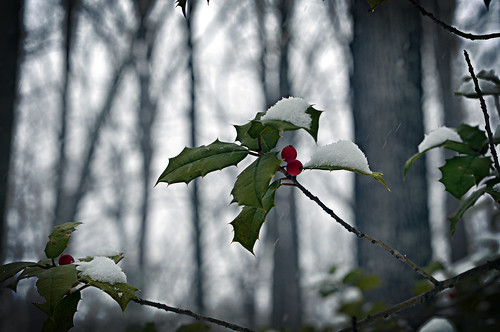
On this third Monday of Advent, a poem by one of my favorite writers, Louise Glück.
Winter can tempt us to despair. Cold, death, endless waiting. It is easy to stop believing in spring.
He did tell us how it would be. “Unless a kernel of wheat falls to the ground and dies,” he said. And he was right. The seeds of resurrection were planted in these dark days before Christmas.
Even our winters are redeemed.
Snowdrops
Do you know what I was, how I lived? You know
what despair is; then
winter should have meaning for you.
I did not expect to survive,
earth suppressing me. I didn’t expect
to waken again, to feel
in damp earth my body
able to respond again, remembering
after so long how to open again
in the cold light
of earliest spring –
afraid, yes, but among you again
crying yes risk joy
in the raw wind of the new world.
– Louise Glück
by Christie Purifoy | Dec 5, 2011 | Advent, Jesus, Poetry, prayer

I recall that the One to whom we cry is no longer an infant, and this feels both wonderful and terrifying.
We begin to see him as he now is in dreams and poetry, for only metaphor can give us a glimpse of the truth: “His head and hair were white like wool, as white as snow, and his eyes were like blazing fire … his voice was like the sound of rushing waters” (Revelation 1:14,15).
Here, on this second Monday of Advent, is a poem from Madeleine L’Engle. She who dared to imagine and yet still dared to pray.
Come, Lord Jesus
Come, Lord Jesus! Do I dare
Cry: Lord Jesus, quickly come!
Flash the lightning in the air,
Crash the thunder on my home!
Should I speak this aweful prayer?
Come, Lord Jesus, help me dare.
Come, Lord Jesus! You I call
To come (come soon!) are not the child
Who lay once in the manger stall,
Are not the infant meek and mild.
You come in judgement on our all:
Help me to know you, whom I call.
Come, Lord Jesus! Come this night
With your purging and your power,
For the earth is dark with blight
And in sin we run and cower
Before the splendid, raging sight
Of the breaking of the night.
Come, my Lord! Our darkness end!
Break the bonds of time and space.
All the powers of evil rend
By the radiance of your face.
The laughing stars with joy attend:
Come Lord Jesus! Be my end!
– Madeleine L’Engle
by Christie Purifoy | Nov 28, 2011 | Advent, Poetry, Seasons, Waiting
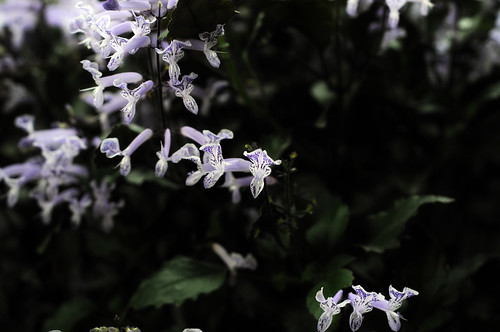
In keeping with my “poem-each-Monday” tradition, here is a poem for you on this first Monday of Advent.
These lines come from T. S. Eliot’s Four Quartets. They remind me of this Advent paradox: in a wintery season of death and darkness we perceive birth and new life. Midwinter spring, indeed.
from “Little Gidding”
Midwinter spring is its own season
Sempiternal though sodden towards sundown,
Suspended in time, between pole and tropic.
When the short day is brightest, with frost and fire,
The brief sun flames the ice, on pond and ditches,
In windless cold that is the heart’s heat,
Reflecting in a watery mirror
A glare that is blindness in the early afternoon.
And glow more intense than blaze of branch, or brazier,
Stirs the dumb spirit: no wind, but Pentecostal fire
In the dark time of the year. Between melting and freezing
The soul’s sap quivers. There is no earth smell
Or smell of living thing. This is the spring time
But not in time’s covenant. Now the hedgerow
Is blanched for an hour with transitory blossom
Of snow, a bloom more sudden
Than that of summer, neither budding nor fading,
Not in the scheme of generation.
Where is the summer, the unimaginable
Zero summer?
– T. S. Eliot
by Christie Purifoy | Nov 21, 2011 | Poetry, Seasons

Soon we take our seats around the table in order to say, “Thank you.”
Gerard Manley Hopkins shows us how.
Pied Beauty
Glory be to God for dappled things –
For skies of couple-colour as a brinded cow;
For rose-moles all in stipple upon trout that swim;
Fresh-firecoal chestnut-falls; finches’ wings;
Landscape plotted and pieced – fold, fallow, and plough;
And all trades, their gear and tackle and trim.
All things counter, original, spare, strange;
Whatever is fickle, freckled (who knows how?)
With swift, slow; sweet, sour; adazzle, dim;
He fathers-forth whose beauty is past change;
Praise him.
– Gerard Manley Hopkins
by Christie Purifoy | Nov 14, 2011 | Faith, Poetry, prayer, Uncategorized
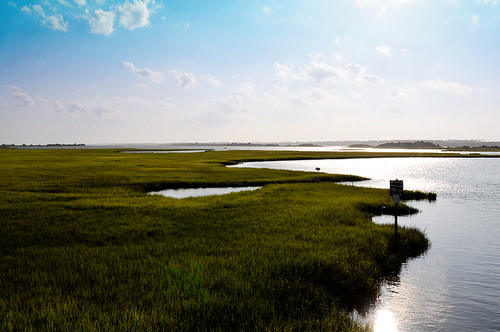
For you on this Monday: a sonnet from Irish farmer-turned-poet Patrick Kavanaugh.
I suppose there are those who might find heresy in this poem. “Pantheism,” they would say.
I don’t defend the idea. If God is everything and everything is God then what good is God, I wonder? And yet, I do not think that this is a heresy strong enough to deserve much disapproval (at least not today in the United States). We have silenced nature very effectively with our parking lots and our strip malls, our corporate ladders and our electronic shadow selves.
This poem reminds me to listen for the voice of God whispering all around.
I can’t prove that His is the voice you hear in water and wind. But, to borrow Kavanaugh’s words, some arguments aren’t meant to be proven.
Canal Bank Walk
Leafy-with-love banks and the green waters of the canal
Pouring redemption for me, that I do
The will of God, wallow in the habitual, the banal,
Grow with nature again as before I grew.
The bright stick trapped, the breeze adding a third
Party to the couple kissing on an old seat,
And a bird gathering materials for the nest for the Word
Eloquently new and abandoned to its delirious beat.
O unworn world enrapture me, encapture me in a web
Of fabulous grass and eternal voices by a beech,
Feed the gaping need of my senses, give me ad lib
To pray unselfconsciously with overflowing speech
For this soul needs to be honoured with a new dress woven
From green and blue things and arguments that cannot be proven.
– Patrick Kavanaugh
