by Christie Purifoy | May 4, 2013 | Books, children, Family, motherhood, Uncategorized
Another Saturday, another peak at my bookshelves. This one is for the mothers.
I know what you’re thinking. Who has time for reading once they have children? Admittedly, this is how I feel about exercise, but I do know a few moms who make the time. Me, I make time for reading. Every Single Day.
The secret? Lower Your Standards.
It is not possible to keep a pristine kitchen floor and read a novel a week. Priorities, people. It’s about priorities.
With that in mind, here are a few books for Mom.
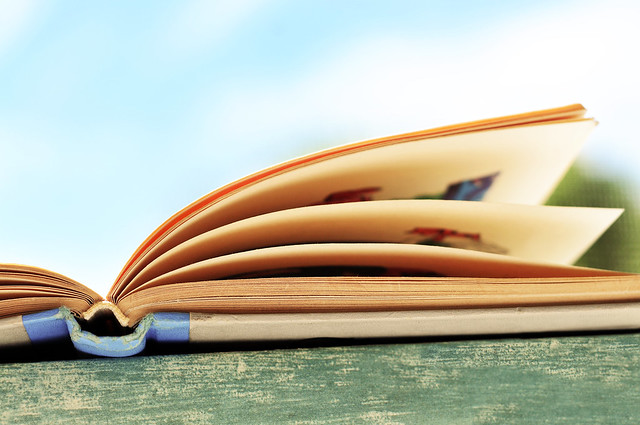
I gave this one to my own mother a few years ago: Apples for Jam: A Colorful Cookbook (No) by Tessa Kiros.
This is a cookbook by a mom for moms (or anyone who cooks for a family). It doesn’t try to tempt children with smiley faces on pancakes. It doesn’t try to trick children by sneaking spinach purees into the brownies. This is a simple but beautiful book full of comforting, delicious, family-friendly food with a European flare.
This cookbook is all about memories. Creating them. Cherishing them. This is a cookbook that knows family happens around the table.
Apples for Jam is a satisfyingly hefty hardcover book full of beautiful photographs and the author’s own family memories.
Something else: the recipes in this cookbook are organized by color. Pink. Brown. White. And so on. It is wildly impractical and utterly enchanting. Kiros understands that many of us go looking for a recipe, not because we need an “entree” or an “appetizer,” but because we want to feed someone. We want to take care of ourselves and others. Maybe that requires an entree. But maybe that requires something white and beautiful. Or something rich and brown.
My Greek friends remember coming home from school to a piece of white bread, lightly broiled and splashed with olive oil, then sprinkled with some beautiful oregano, crushed between their mamma’s fingers.
This year I sent my mother-in-law Everything That Makes You Mom: A Bouquet of Memories by Laura Lynn Brown. Laura is a friend, but I’ve been excited about her book ever since she shared the concept with me.
This is a gift book, but I hesitate to call it that. Aren’t most “gift books” horrible? Do they ever get pulled from their place on the bookshelf? I’m willing to bet not often.
Everything That Makes You Mom is different. Full of great (read: not sentimental) quotations about motherhood and structured around the author’s own memories of her mother, this beautiful little book asks questions and offers prompts to help us record the big and little things we remember about our Moms.
Complete with your written memories, this would make a great gift for your mother. If your mother is no longer living, this book would make a wonderful keepsake for the next generation.
Mom bought a gravy whisk that we saw in a specialty kitchen store not so much because she needed a gravy whisk, but because its packaging claimed, ‘It scoffs at lumps.’ She gave it a new name: lump scoffer. When she made gravy, she whisked with glee, scoffing at those lumps herself with a single ‘Ha!’
Finally, here is the only parenting book I ever recommend: Parenting Is Your Highest Calling: And Eight Other Myths That Trap Us in Worry and Guilt by Leslie Leyland Fields.
I could tell you all about this one, but, really, isn’t the title enough? This book will set you free: free to live, to love, to be a whole person as well as a Mom or Dad.
If you or someone you know is feeling overwhelmed by parenthood itself or overwhelmed by all of the guilt-inducing advice send them this book. Trust me. When I first read this book I whispered thank you, thank you, thank you with every page I turned.
We want so badly to get it all right – our marriages, our parenting, our family dynamics. We want to meet all the requirements of a good Christian family. But God takes every hour of our home life, as well as every hour outside of it, and he uses the mistakes, the flaws, the pain as much, if not more, than he uses the good.
by Christie Purifoy | Apr 27, 2013 | Books, children, Family, motherhood, Uncategorized
Today, he turns four. My beautiful boy.
These are the books we read together. These are the books that will one day bring me to tears when I pack them up in boxes.
This Saturday’s book recommendations are all Beau-approved. And he is one discerning little guy.

I can no longer remember if I bought this book with Beau in mind. I think I did. All children love balloons, but Beau’s adoration is of long standing and un-paralleled intensity. Emily’s Balloon by Komako Sakai is beautiful. A book for little people and their grownups.
The story is simple but profound. The illustrations will melt your heart.
Best of all, this sweet little story of a girl and her balloon was one of the few books Beau was willing to sit through at age two that he still enjoys today.
This one’s a keeper.
Helen Oxenbury is one of my favorite children’s book illustrators. King Jack and the Dragon by Peter Bently, and illustrated by Oxenbury, was definitely purchased with Beau in mind.
Here is another one for littles and their parents. We appreciate the story of a child’s imaginative play (complete with giants who turn out to be mom and dad coming to bring Jack in for bed), and they get inspired to build their own backyard, dragon-proof, tent fortresses.
This is an old-fashioned book that doesn’t feel even the slightest bit old.

Alphabet books are funny things. They tend to feel baby-ish, and we often acquire them when our children are too little for alphabet lessons. The inscription in my copy of Gyo Fujikawa’s A to Z Picture Book reminds me that I bought this one for Beau’s first Christmas (he was eight months old).
Most books purchased too early begin to fade into the wallpaper of our lives. Understandably, we forget to pull them out when they might be age-appropriate. Thankfully, I remembered this one in time.
Beau (unlike his older brother at this age) has a strong fascination with the alphabet. I’m not sure if it’s an interest unique to him or if he’s been inspired by his two older book-reading siblings, but this book is exactly what he needs right now. It’s the kind of book he can actually “read,” and that means a great deal to this always-trailing-two-steps-behind third born boy.
Alphabet books are a dime a dozen, aren’t they? This one, however, is a work of art. Fujikawa’s illustrations are equal parts adorable and intricate. There is a gorgeous mix of black-and-white ink drawings and softer pastel full-color spreads.
This is a book to linger over, searching each drawing, slowly turning pages.
This is a book for sharing, side-by-side, underneath a quilt on a rainy day.
And only the best books are snuggling books.
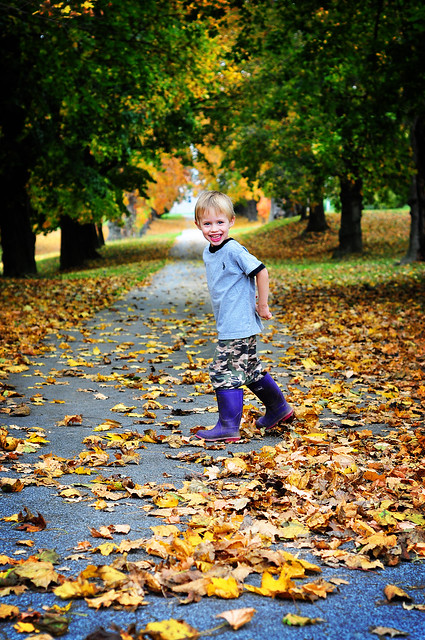
Happy birthday, Beau. I love you.
Mama.
p.s. I know you better than I did last year. You are one year closer to the Beau I glimpsed in that river of prayer.
by Christie Purifoy | Apr 20, 2013 | Books, Gardening, Home, Pennsylvania, Spring, Uncategorized
This is a gardener’s favorite time of year. All is new green growth and hopeful expectation. Weeds, bugs, and wilting heat are yet to come. Snow and freezing temperatures seem more and more remote.
It is my favorite time of year.
Whether you are an armchair gardener or a gardener with dirt under your nails (I’m a little bit of both), here are three books for the season.

Wild violets in the yard here at Maplehurst.
(all the photos in this post taken by yours truly)
Gardening books are some of the favorites on my shelves. In the age of google you’d imagine the internet would be a gardener’s best resource. In my opinion, the internet is almost too helpful. It can be difficult to sort the good advice from the bad, and I rarely google a gardening question without ending up overwhelmed. A well-edited, common-sense garden reference book is so much better.
My copy of The Garden Primer: Second Edition by Barbara Damrosch is creased and dirty. Like a good cookbook, this is a sign of its worth. When we planted apple trees, this book showed us how. When choosing blueberry varieties, I consulted this book. From roses to vegetables, from seed starting to planting bulbs, this book has just enough (and never too much) to say about almost everything that grows.

I need to learn the name of these white-flowering shrubs. They are stunning.
I bought The Tree Book for Kids and Their Grown Ups by Gina Ingoglia for my children. They’ve enjoyed it, but I know I’ve opened it up more than they have.
The watercolor illustrations are beautiful and informative. Yes, we could always turn to google images, but it is so much more satisfying to take this book along for a walk, identifying leaves and bark and fruit along the way.
It’s one of my goals to know the names of all the trees growing here at Maplehurst. This book is a very nice way to start.

Lawns without weeds or dandelions make me nervous. Our own lawn supports a healthy ecosystem of weeds.
The title of Ruth Stout’s Gardening Without Work: For the Aging, the Busy & the Indolent pretty much speaks for itself. Originally published in 1961, this book by the folksy grand dame of American home gardening is funny, entertaining, and, occasionally, quite helpful.
Stout’s advice can pretty much be summed up in one word: mulch. But, it’s a very good word. Ask me in a few years if mulching has really made vegetable gardening easier, however my broccoli seedlings do look very cozy in their mulched bed.

The magnolia blossoms are almost as beautiful after they’ve fallen.
Do you garden?
by Christie Purifoy | Apr 13, 2013 | Books, Uncategorized
I didn’t read many fairy tales as a child. I’m afraid my fairy-tale education was managed entirely by Disney.
I think, now that I’m grown, I’m making up for that deficiency.
I love stories with their roots in faerieland. I love books in which the line between fantasy and reality is, not blurred exactly, but elusive, as if we are experiencing the world we know but reflected, as in a mirror or pool of water.
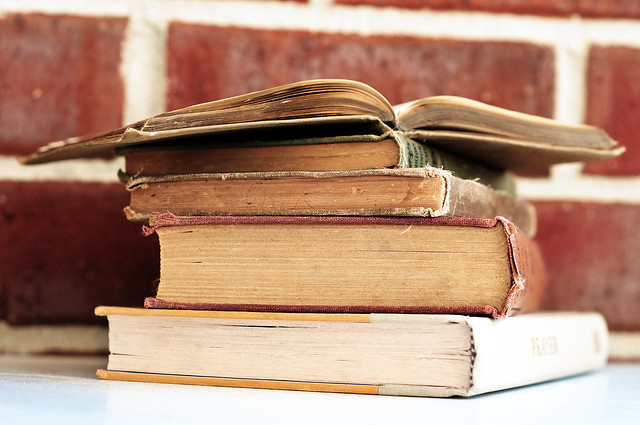
The books I’m thinking of are not magical realism. They are stories in which the magic is decidedly bookish. They are stories that remind us we cannot actually separate what we call reality from the tales we pass down around campfires and cradles.
To believe that stories (and the wonders and monsters with which they are filled) belong to some reality that does not touch us in our daily lives is to grossly underestimate the power of a fairy tale.
There are some truths we can only face by fencing them off and naming them Cinderella or Sleeping Beauty.
These books suggest that those fences may not be as strong as we like to think.

The Snow Child: A Novel by Eowyn Ivey is a new favorite. The story it tells is at once familiar and strange. There is an old man and an old woman. They have no children. One day they build a child out of snow, and that child is made alive by love and longing.
This is also a story about homesteading in Alaska in 1920. If cabbages grow to enormous sizes almost overnight because the sun never really sets is that fairy tale or reality? It’s difficult to say, and that is what I loved best about this novel. Our ideas of real and not real are tested, but they still matter.
Ivey does a masterful job of keeping her story always precisely on the line between fairy tale and real, lived experience. By the end, this beautiful, enjoyable novel proves that the line between the two is much less important than the fact that love is the most powerful element in both.
In my old age, I see that life itself is often more fantastic and terrible than the stories we believed as children, and that perhaps there is no harm in finding magic among the trees. – Eowyn Ivey
Little Black Book of Stories is A.S. Byatt’s collection of fairy tales for adults. I haven’t read this one in a few years (I think I’ll remedy that over the weekend), but I remember being captivated by stories that are dark, smart, and twisty-with-surprises. These are most definitely tales for adults, but the darkness is not unrelenting. One of my favorites is the tale of a grieving woman slowly turning into stone. It sounds horrifying but it is in fact beautiful, even redemptive, and the explicit link between Byatt’s story and Icelandic fairy tales is just the kind of thing I love.
She thought human thoughts and stone thoughts. The latter were slow, patchily coloured, textured and extreme, both hot and cold. They did not translate into the English language, or into any other she knew: they were things that accumulated, solidly, knocked against each other, heaped and slipped. – A.S. Byatt
I couldn’t recommend fairy tales for adults without mentioning at least one book by George MacDonald. Phantastes is the one I have in mind to re-read. Do you have a favorite book by MacDonald?
Rather than describing this particular book, or any of the others, I will only remind you what some of my favorate writers have said about him.
C.S. Lewis said, “I have never concealed the fact that I regarded George MacDonald as my master; indeed, I fancy I have never written a book in which I did not quote from him.” W.H. Auden called MacDonald “one of the most remarkable writers of the nineteenth century.” My beloved Madeleine L’Engle wrote that “Surely, George MacDonald is the grandfather of us all – all of us who struggle to come to terms with truth through fantasy.”
All mirrors are magic mirrors. The commonest room is a room in a poem when I turn to the glass … – George MacDonald
Do you have a favorite fairy tale?
by Christie Purifoy | Apr 6, 2013 | Books, Uncategorized
The first books I ever truly loved were the Nancy Drew mysteries. In middle school I couldn’t get enough Sherlock Holmes, Hercule Poirot, and Miss Marple.
Today, mysteries are my number one comfort read. Actually, they’re just about the only thing I watch on television, too, provided they’re British.
This could explain why every time I take my kids to our local library (housed in an old railway station), I imagine myself in shoulder pads, sensible pumps, and wicked red lipstick making a dash for the 9:42 to London (even though I told my nosy neighbor I was taking the 8:42). Of course, our dimwitted constable will take my alibi for granted until Miss Marple proves me a liar.
Wait, you’re saying you don’t have daydreams like this? Well, you should read more books like these …
//
//
Margery Allingham’s The Tiger in the Smoke: Albert Campion #14 is a classic, and it’s my favorite of the Albert Campion mysteries. You could read the first thirteen (something I do recommend you do eventually), or you could dive right into the best.
London is blanketed in a great fog, and a fierce, knife-wielding killer is on the loose. Allingham’s novel has the lightness and wit of all her Campion books, but this one is much more intense and terrifying. As other reviewers over the years have pointed out, this novel seems to straddle a literary dividing line. Feet planted in the golden age of detective fiction, it nonetheless looks forward to the contemporary psychological thrillers so familiar to us now.
The novel also has a theological bent that is (ironically) rare in these books about crime, death, and justice. There’s much more to contemplate here than just the goosebumps on your arm.
Lead us not into temptation, for of that we have already enough within us and must resist it as best we can in our own way. But deliver us, take us away, hide us from Evil.” – Margery Allingham
My next recommendation is much less serious, though it, too, centers on a creepy, mind-boggling murder. This is Edmund Crispin’s The Moving Toyshop: Gervase Fen #3 . I have yet to read numbers one or two, but number three is a treat.
In the interest of full disclosure, the crime-solver in this series is an Oxford literature professor, so my love for this book is easily explained. However! Amazon.com has just informed me that P.D. James (more about her below) named this book one of the top five mysteries of all time. So, I think this one has appeal beyond my own particular niche demographic.
Here’s the plot in a nutshell: Richard Cadogan is a poet in need of a vacation. He heads to Oxford where, toward the middle of the night, he discovers a murdered corpse in the apartment over a toyshop. Bashed over the head, Cadogan spends the night stuffed in a closet. He escapes and returns with police the next morning, but … the toyshop has disappeared. Of course, this is a case for Gervase Fen (Oxford Don extraordinaire).
This novel is funny, farcical, ridiculous, and, simply, wonderful. It is by far the most “literary” literary mystery I know. Who knew one could simultaneously solve crimes and spend hours drinking and talking Shakespeare in the pub?
None but the most blindly credulous will imagine the characters and events in this story to be anything but fictitious. It is true that the ancient and noble city of Oxford is, of all the towns of England, the likeliest progenitor of unlikely events and persons. But there are limits.” – Edmund Crispin
I might have included this final suggestion in my list of books I don’t know why I picked up but am so glad I did. You’ve probably heard of this one. I saw it for sale at Costco recently. This is Death Comes to Pemberley (Vintage) by P.D. James.
I’m including this recommendation, not because I think it’s a literary masterpiece (it isn’t), but because it’s been a long winter, and I’ve been feeling desperate for books as comforting as mashed potatoes or chocolate cake. I’m also including it because you probably share my horror of Jane Austen spinoffs and ripoffs (zombies, anyone?) and so might miss what is a very enjoyable book.
The book cover says it all. The queen of mysteries writes a sequel to Pride and Prejudice in which Elizabeth’s and Darcy’s happiness at Pemberley is threatened by murder. James is no Austen, but she does a surprisingly good job capturing Austen’s characters. I’m actually embarrassed to admit how much I enjoyed this glimpse of Elizabeth and Darcy and their world after the wedding bells.
The mystery element makes it all the more fun. So, put down that chocolate chip cookie and try this instead (or, better yet, try both).
If this were fiction, could even the most brilliant novelist contrive to make credible so short a period in which pride had been subdued and prejudice overcome? – P.D. James
Do you read mysteries? Watch them? Any favorites?
by Christie Purifoy | Mar 16, 2013 | Books, Uncategorized
I tend not to read the books everyone else is reading. At least, I don’t read them while they are being talked about. Years after the fact, I might grab an “Oprah’s Pick” or a “Now a Major Motion Picture” paperback at the thrift store. Usually, I discover that everyone else was on to something good.
Still, this contrary streak persists.
I may not read the cocktail-party-conversation books, but I do read the The Big Conversation classics.
Of those, I re-read an even smaller selection.
Here are a few classics you may have missed. These aren’t the books to check off some must-read list (though if I had to recommend one of that sort, it would be James Joyce’s Ulysses, just fyi).
These are the books to read and read again.
These are books like old friends and crocheted afghans and steamy cups of tea.

First, there is The Woman in White by Wilkie Collins. No doubt Oprah’s Victorian equivalent would have splashed her name all over the cover of this page-turner. Here is mystery, crime, intrigue, and atmosphere like only the English Victorians knew how to do.
My hour for tea is half-past five, and my buttered toast waits for nobody. – Wilkie Collins
For those of you whose appetites for emotional dramas set during the French Revolution have recently been wetted, I recommend A Tale of Two Cities by Charles Dickens.
With all of the narrative padding that makes nineteenth-century fiction so maddening for some and so enjoyable for others, this is my favorite Dickens. That admission probably doesn’t say much about my critical prowess, but, remember, these are the classics we want to read, not the ones we must.
Not only do we have the French Revolution and a famous opening line, but, in hero Sydney Carton, we have a Christ-figure par excellence.
It is a far, far better thing that I do, than I have ever done; it is a far, far better rest that I go to than I have ever known. – Charles Dickens
Last, but, whoa-nelly, not least (this one’s a doorstop, folks), is George Eliot’s Middlemarch. If you want to impress people on the subway, el, or metro, then Eliot is your girl. But don’t let the length discourage you. The long length is one of my favorite things about this book. This is the kind of book that is most enjoyable while there are still lots of pages to go. It’s a sad day when the last page is turned and you must leave Eliot’s masterfully created world and the wonderful characters who populate it.
Middlemarch is Serious Victorian Literature, and so it is also Serious Reading Fun. I mean, there are so many words! so many characters! so many hyper-realist details! Open to the first page, read slowly, and do not worry about when you will reach the end. This one is all about the journey (and Eliot’s is a very impressive journey). Enjoy.
It is a narrow mind which cannot look at a subject from various points of view. – George Eliot
P.S. I googled Sydney Carton’s name to check the spelling and discovered that A Tale of Two Cities was once an Oprah Book Club Pick. My mind is blown. I had no idea. How did I ever miss a televised interview with Charles Dickens? Someone, please tell me, did he jump on the sofa?


