by Christie Purifoy | Apr 27, 2012 | Family, God's promises, healing, motherhood, prayer, Uncategorized
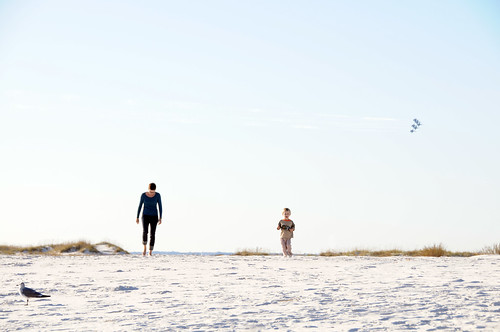
A birthday letter for one’s child should be a marker of all that a mother knows. For instance, on the day you turned three you had a scratch on your cheek and a bruise on your forehead. Your legs and arms were somehow both surprisingly long and impossibly tiny. You loved your balloon. You whined for more chocolate cake. You pronounced it so carefully: “choc-oh-lut.”
But you are almost entirely unknown. This doesn’t bother me or frighten me. At least once a day your father or I will laugh at you and say, “Who are you? Where did you come from?”
Your blonde hair sets you apart in our family. But it is more than appearance. Perhaps it is comparison. With two older siblings whose personalitites and interests have seemed long settled, you are less familiar. We are still getting acquainted. You are still getting acquainted with the world.
Or, perhaps it is a holdover. You were unknown for nine months before your birth. Boy or girl? We chose not to know. You were the little stranger born into the thoroughly familiar, the utterly known: our own bed, in our own apartment, in a city that felt like home.
There has been only one moment when I saw more. One moment when I seemed to glimpse the you that is still buried in your bones.
You were six months old. It was late at night. Your cough was so like a barking seal that we had no need to google symptoms. We could name it. By naming it we felt we had tamed it.
We had done no such thing. In the space between those known, nameable coughs your breath became jagged. Desperate. Each breath seemed just on the verge of not coming at all.
Your father spoke with the nurse on call, and I held you on the floor of the bathroom, your face hardly visible through the steam. I prayed for you.
So often prayer is just a desperate word or two. It hardly seems capable of traveling whatever distance lies between my mouth and God’s ear. But sometimes prayer takes over and I know that it does not come from me at all. It is more like a river, and I’ve just fallen in.
Sitting there, holding you, I was in that river and I saw something. It was as if that rushing river of prayer drew back the veil between known and unknown, seen and unseen. I saw You, the you that is never just a baby or a three-year-old, but the You that is every age, and I recognized how far away from me you would travel. I could see you bringing light into dark places where I would never go. It seemed to me, as I prayed, that there was a great struggle taking place in this ordinary, steamy bathroom.
Later, I recognized that this river of prayer was not my communication with God. It wasn’t my puny request for healing. A simple question to be answered “yes” or “no.” The prayer was God’s own roaring response to the darkness, the utter evil, that would end your life before you could do all that you were made to do. Or, more importantly, before you could become who you were made to be.
God wouldn’t allow it. Yes, the darkness was there with us, grasping at you as you grasped for breath, but God was shoving it aside. Saving you because we needed you. A “we” that includes so many more than just your father and I.
I don’t know exactly who you are or how far you will go. I do know your life will be beautiful, more beautiful even than these first three years. Your life will matter, more than it already has to your family. And I know you are one step closer today to the promise I glimpsed in that prayer.
You are three.
by Christie Purifoy | Apr 24, 2012 | Family, Florida, God's Love, Home, Jesus, motherhood, Music, Pregnancy, Uncategorized
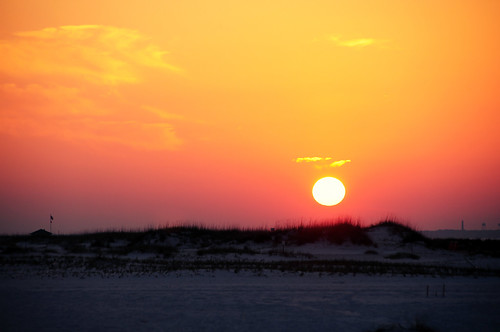
Sometimes I think about the privileged ones in God’s story. The ones called out into the desert, like Abraham, Moses, even Jesus. The desert was brutal. Not a place or an experience they would have chosen.
It was also beautiful. They met angels there. They met God himself there.
There are others, too. Like Hagar. Hagar knew desolation in the desert, but it was also there that she discovered the intimacy and the peace of being seen. “You are the God who sees me,” she said. “I have now seen the One who sees me.”
To follow God into the desert is to turn your back on ordinary life. To trade comfort for something much harder and much better.
I know this, but why do I also know that I don’t want to hear that call? Shouldn’t I be willing not only to follow but to run toward the God of the desert?
I’ve had these lyrics bubbling up in my mind for days:
When we were young
We walked where we wanted to
Life was ours
And now we’re old
We go where we’re told
The Lord’s Spirit calls
He’s singing
Follow my road to sorrow and joy.
(from “Desert Father” by Josh Garrels)
We left Chicago two years ago to follow that singing voice into the desert. I hoped for joy, but found, mostly, sorrow.
I’m not sure I would have followed had I known.
I’m glad I didn’t know, because we never do look far enough ahead.
I would have seen loss. I would have seen loneliness, and I would have stopped looking, turned my back, and walked the other way. I’m sure of it.
I would have turned my back on the road that would carry me through the loss, through the loneliness and toward …
Another daughter. A gift and a blessing I was sure would never be mine. I was sure, and I was wrong.
Now I pray, with hope and joy, the final words of “Desert Father.” I pray them for myself. I pray them for you:
Hold on
All you
Who wait by the blue shores
For him
To part the water
Desert Father
Show us a new way
The impossible dream
Through the deep and the unseen
Carry us home.
by Christie Purifoy | Apr 20, 2012 | allergies, healing, Jesus, Music, Seasons, Uncategorized, Waiting

Unless this is your first visit to my blog, you know that I’ve been in waiting mode almost since the day, two years ago, when we arrived in Florida. One of the very first posts I wrote was called On Waiting.
Two years ago, I didn’t know what I was waiting for. And, sometimes, waiting is like that. It is a heavy weight. An ache. A question: what now?
But God was present in the waiting. Every day there was water seeping from desert rocks. Food dropped, fully-prepared, on the desert floor.
Occasionally, I even spotted the cloud by day and the fire by night. Spring wildfire season in Florida meant that once we followed a narrow column of smoke the whole twenty-minute drive from our church to our house. Another evening, we followed a full moon made blood-red by reflected fire. That fiery moon hovered in the center of our ash-covered windshield for the long, long drive from a downtown theater to our home. Whoever said that metaphors aren’t as solidly real as flesh, blood, and bread? Those old Bible stories are still alive, you know.
God has been water and bread, fire and cloud for us. And, slowly, so slowly, he filled in the emptiness of waiting with vision. I still waited, but I could see something of what it was that I waited for. This waiting was less desperate but more impatient.
Even hopeful, expectant waiting is difficult. I have wearied of the waiting. I wearied of it long before I knew how heavy it would become.
This winter I got sick. Florida’s pollen season came early and fiercely, and my lungs failed. I spent weeks lying still beside my bedroom air-purifier focusing on each breath. On the worst day, the day that found me back on the doctor’s examining table desperate for new asthma drugs, I found out that I was pregnant. Such surprising, beautiful news, but it was hard to hold on to my belief in an unseen baby while my body tumbled down into an even darker hole. Now nausea and exhaustion kept me pressed into my pillow more tightly than even the asthma.
And I waited. For hope. For healing. For breath.
I waited for God to show up, and I expected fireworks. I imagined an end to my waiting something like a switch clicking from dark to light. When will he come, I wondered. Tomorrow? The next day? How long, Lord, how long?
This morning I sat in the lovely light of a college chapel for a presentation on lament. Lament like that of Psalm 13: “How long must I wrestle with my thoughts and day after day have sorrow in my heart?”
I’m in Michigan for a writer’s conference, and it feels strange and beautiful to be enjoying again the midwestern spring. Daffodils and tulips. Redbuds and soft, green grass. Unfortunately, the beauty also means that Florida’s pollen has followed me northward. In the busyness of travel I forgot to take my little, pink asthma pill. During my first day at the conference I could never quite escape the pain in my chest and the breathless anxiety that is like a sharp, metallic taste in my mouth. I remembered the pill this second day, and I could enjoy, a little more easily, the cool, wet wind and the rainy sidewalks plastered with petals.
One of the presenters in this session on lament, a songwriter, asked his audience of writers to sing. And, so, I found myself breathing out these words, my own tune-less voice supported by all the voices around me: “The One who gives me breath. He is my Shepherd. I shall never be in want. I shall never be in want.”
The One who gives me breath.
He is my Shepherd.
While I waited for fireworks, for the coming of God like thunder and lightning, my Shepherd slowly, almost imperceptibly, brought me from a sickbed to a chapel filled with the light of a midwestern spring. He did this so that I could know: He is the one who gives me breath. I shall never be in want.
Perhaps my waiting isn’t over, but I know that it is ending. One seed planted in darkness and emptiness is now a fully-formed child, prodding me from within. And I believe that this new life is not the only seed that God has planted in these waiting years.
The true end of my waiting will be, I think, like the coming of spring itself. Subtle. Slow. Until I find myself singing a God-given song and wonder, “When did this happen? How did I get here?”
“How long, Lord? … How long will you hide your face from me? … But I trust in your unfailing love; my heart rejoices in your salvation. I will sing the Lord’s praise, for he has been good to me.”
(Psalm 13)
by Christie Purifoy | Apr 12, 2012 | Art, Community, Jesus, Religion, Uncategorized
I grew up hearing Christians say, “It’s not a religion, it’s a relationship.” Maybe you did too?
It’s a sentiment that makes sense to me. Plenty of not-so-great things (and some down-right awful) probably fall under the heading religion. Yet, in the days since Easter Sunday I’ve been thinking how grateful I am for relationship and religion.
Because Jesus came to us, we can see and know God. This is true not only because he died and defeated death, but because he lived. He lived. And now we know what life was always meant to be. Through Jesus we can relate to a God who is vast, beyond comprehension, and yet personal in his love for his creation. Now we live, not by bread only, but by relationship with the Word.
What good is religion, then? Isn’t it merely the false, the superficial, the man-made?
Perhaps. Sometimes.
It is also the form so many souls have given (and will give) to their worship. It is an often intangible relationship made material: in bread and wine, the washing of dirty feet, the standing, the kneeling, the hands reaching out in praise and in prayer.
It is candlelight. It is incense. It is light glinting on a gold cross. It is a crescendo of voices. It is one voice reading Scripture aloud for an entire hushed crowd.
It is astonishing and creative.
It is beautiful and traditional.
Of course, it can also be awkward and frustrating. The uncomfortable pew. The piano in need of tuning. My five-year-old deciding he must visit the bathroom just as our row is ushered forward for the Eucharist.
Sometimes we do religion well. Sometimes not so well. And it sure takes a whole lot of effort. The musicians spend hours practicing. The tech-savvy come in early, stay late, and shrug off the irritated looks when the sound system malfunctions through no fault of their own. A dedicated teacher takes the two-year-olds outside for an egg hunt, and some important but often unseen person lingers behind to turn off lights and lock doors.
Is it worthwhile?
Jesus showed us the value in celebration, in gathering, and in breaking bread together. He read Scripture aloud, and he taught. He often prayed alone, but he also begged his friends to pray with him. And in his eagerness to eat a Passover meal with his disciples (Luke 22:15), Jesus promised that our rituals and God-given traditions will one day find their fulfillment – their perfection – in the kingdom of God.
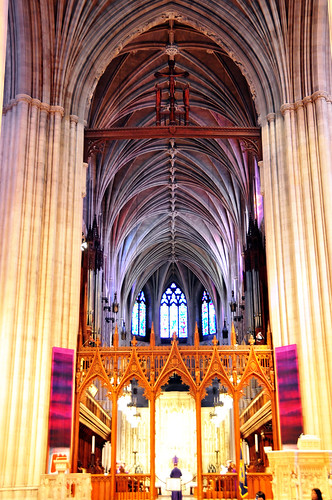
For now it takes effort, whether we gather in a home, a school gymnasium, or an art-filled, stained-glass space. The bread must be baked. The invitations delivered. The space cleaned before and after. But, together, we are creating an outward expression of an inner joy.
We are saying “thank you” and “please come” to all that has been promised.
“Come, let us bow down in worship, let us kneel before
the Lord our Maker.”
Psalm 95:6
by Christie Purifoy | Apr 6, 2012 | Faith, Family, God's Love, God's promises, grief, Jesus, Lent, motherhood, Uncategorized
I thought it would be hard to fit Good Friday into Spring Break. I thought it would be difficult to clear space for the cross in a week devoted to beach, pool, and mother-daughter shopping.
I was wrong.
In the car, on our way to the dollhouse store, her voice pipes up from the back seat. It’s hard to hear, the radio too loud, but I know she’s just said something about Daniel. I want her to stop talking. I can’t bear to hear any more about Daniel.
“That’s where Daniel lived.”
“Daniel is gone now.”
“Daniel is the first kid my age to die.”
Then she repeats the words I’ve heard so many times these past few weeks: “I wish I knew what happened.”
My daughter wants to understand how her second-grade classmate died. She wants to know how his little brother died. And how his mother died. We’ve talked about it a lot, but when it comes to the details, I’ve been vague. I’ve spoken of mental illness and accidents. I’ve never spoken the word murder. I can’t bear for her to know how dark the darkness really is.
It’s amazing, really, that she doesn’t know. With all the television cameras camped in front of her school, the grief counselors gathering the children into circles on the floor, the adults whispering at the bus stop, and me, trying to turn the tv off, the radio off, whenever she walked into the room, it’s a wonder that we managed to protect her from the full story. Because, of course, the full story only leads to an unanswerable question: why?
Why did this happen to these beautiful boys? God, why did you let this happen?
The small voice from the backseat says, “Daniel is in the ground now.” With these words, I find my voice again, and I tell her what I believe.
I tell her about Good Friday. I share the word gospel, and I explain that it is so much bigger, so much more beautiful than I understood when I was her age.
When I was a child, growing up in the church, I thought the gospel was this: “I am a sinner so Jesus died and rose again to reconcile me to God. Now I can have a relationship with God.” But I only understood a small part of the story.
My personal salvation is precious to me, but it is only one, small part of the Easter story. When I face evil, like the darkness which led to Daniel’s death, my personal salvation starts to look small. Insufficient. Sometimes, I even dare to whisper this dreadful doubt: “Do I want to be in relationship with a God who allows such things?”
Confronted by the brokenness of our world, I want more … so much more.
On Good Friday, God gave more. He entered history at one, specific moment and he bore on that cross all the brokenness which came before and all the brokenness that comes after. Including Daniel’s murder.
When God’s own son, Israel’s righteous King, chose to suffer and die he unleashed rivers of justice and peace that will one day flood all of creation. This is a kingdom flood. A flood of living water. A flood to make all that is broken whole again.
When Jesus spoke his final words, he meant not only that his ministry on earth was complete, he meant that death, sin, and all the brokenness of creation were ended.
It is finished.
Can we trust him when evil continues to rear its head? Should we turn to him when our questions push us towards despair?
We know that God gave his own son to suffer and die. We know that God did not abandon his son to the grave. I am convinced that he has not abandoned Daniel. He will not abandon me.
He has not abandoned his creation. He is making it new.
Sometimes we see only a trickling fountain. Sometimes we glimpse the roaring river, but we who have pledged ourselves to this King have been given living water.
For now we share that water with our thirsty neighbors, and we look forward to the day promised each Easter, the day when there will be no more desert. No more thirst.
“Of the greatness of his government and peace there will be no end. He will reign on David’s throne and over his kingdom, establishing and upholding it with justice and righteousness from that time on and forever.”
Isaiah 9:7
Shalom.

(photo by yours truly)

