The Language of a Gift
My children make lists for Santa (yes, already), and I peer over their shoulders considering the annual dilemma. Which is better, to receive just what you have asked for or to be surprised with the lovely yet utterly unexpected? In other words, the castle Lego set he spied at the big-box store or the box of fairytale Lego figures that I think will inspire more creative play? The book she read at her friend’s house and loved, or the book she’s never heard of that I’m sure she’ll enjoy?
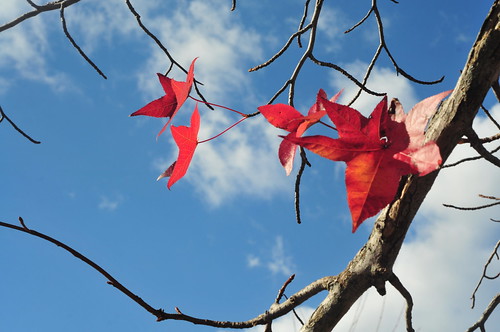
It’s a question I wrestle with particularly during this time of year. Autumn. A season when I long for predictable gifts: falling leaves, cold blue skies, and crisp apples hand-picked by my children.
But these are not the gifts given to me. Instead, as I write this, I can see from my window hot pink camellia blossoms and pale orange tangerines. God, don’t you know that I’m not really a hot-pink kind of girl? Can I exchange the showy flower for something a little more subtle, leaves crackling underfoot, perhaps?
It would be too easy to write that these, tropical flowers and citrus fruits, are the true gifts, and I just need to learn to appreciate them. Who am I to criticize the good things God gives? Who am I to find fault with a creation that is undeniably beautiful and sweet?
And yet … as good as tangerines may be, they do not feel like home to me. Some may taste a personal love note from God in the taste of a just-picked tangerine, but I taste nothing so personal. Good, yes, but not exactly personal.
Still, I can say thank you for the tangerine, and I can mean it. Thank you, God, for speaking a thousand different languages of beauty. Tropical. Desert. Aquatic. Forest. Prairie. Mountain. All good.
Thank you, too, for making me uniquely me. It may look as if I’m hard-to-please. I prefer to think that I am hungry for the love notes that are mine especially. It isn’t that I deserve them, or that I can’t live well without them. It’s simply that I’ve tasted those honey words before, and I trust that there is more, much more.
“… with honey from the rock I would satisfy you.” Psalm 81:16
I remember the sweet taste of things I love best and know that I have tasted God’s goodness. I could spend the rest of my life in the shadow of citrus trees and camellia shrubs, but every day would be drawing me closer to the source of all beauty. Every day would be bringing me towards the love that speaks my language. The love that knows my name.