by Christie Purifoy | Mar 16, 2013 | Books, Uncategorized
I tend not to read the books everyone else is reading. At least, I don’t read them while they are being talked about. Years after the fact, I might grab an “Oprah’s Pick” or a “Now a Major Motion Picture” paperback at the thrift store. Usually, I discover that everyone else was on to something good.
Still, this contrary streak persists.
I may not read the cocktail-party-conversation books, but I do read the The Big Conversation classics.
Of those, I re-read an even smaller selection.
Here are a few classics you may have missed. These aren’t the books to check off some must-read list (though if I had to recommend one of that sort, it would be James Joyce’s Ulysses, just fyi).
These are the books to read and read again.
These are books like old friends and crocheted afghans and steamy cups of tea.

First, there is The Woman in White by Wilkie Collins. No doubt Oprah’s Victorian equivalent would have splashed her name all over the cover of this page-turner. Here is mystery, crime, intrigue, and atmosphere like only the English Victorians knew how to do.
My hour for tea is half-past five, and my buttered toast waits for nobody. – Wilkie Collins
For those of you whose appetites for emotional dramas set during the French Revolution have recently been wetted, I recommend A Tale of Two Cities by Charles Dickens.
With all of the narrative padding that makes nineteenth-century fiction so maddening for some and so enjoyable for others, this is my favorite Dickens. That admission probably doesn’t say much about my critical prowess, but, remember, these are the classics we want to read, not the ones we must.
Not only do we have the French Revolution and a famous opening line, but, in hero Sydney Carton, we have a Christ-figure par excellence.
It is a far, far better thing that I do, than I have ever done; it is a far, far better rest that I go to than I have ever known. – Charles Dickens
Last, but, whoa-nelly, not least (this one’s a doorstop, folks), is George Eliot’s Middlemarch. If you want to impress people on the subway, el, or metro, then Eliot is your girl. But don’t let the length discourage you. The long length is one of my favorite things about this book. This is the kind of book that is most enjoyable while there are still lots of pages to go. It’s a sad day when the last page is turned and you must leave Eliot’s masterfully created world and the wonderful characters who populate it.
Middlemarch is Serious Victorian Literature, and so it is also Serious Reading Fun. I mean, there are so many words! so many characters! so many hyper-realist details! Open to the first page, read slowly, and do not worry about when you will reach the end. This one is all about the journey (and Eliot’s is a very impressive journey). Enjoy.
It is a narrow mind which cannot look at a subject from various points of view. – George Eliot
P.S. I googled Sydney Carton’s name to check the spelling and discovered that A Tale of Two Cities was once an Oprah Book Club Pick. My mind is blown. I had no idea. How did I ever miss a televised interview with Charles Dickens? Someone, please tell me, did he jump on the sofa?
by Christie Purifoy | Mar 9, 2013 | Art, Books, Poetry, Uncategorized
We don’t read poetry any longer, do we?
Oh, a bit here and there, and some of us more than others, but we’re much more likely to end our days with reality television than The Oxford Book of English Verse, aren’t we?
I often wonder why this is. Is it because we are so accustomed to the easy and comfortable we avoid using our spare time for anything that requires real effort? And I won’t fool you. Poetry requires effort. It asks that we meet it at least halfway.
We must quiet our minds (and our stereo speakers). We must slow down (no one ever speed-read a poem). We must re-read (a good poem can’t ever be checked as “read” on our reading lists and tracking apps; poetry happens in the re-reading).
All I really know is that I’ve hesitated to recommend poetry books in this space. I want to make you happy, and I’ve decided happiness means novels, memoirs, cookbooks, and picture books.
I read this article and realized that poetry is worth more than life to some people. They will risk everything for what it gives.
The least I can do is share a few recommendations with you.
Also, I can make this promise – tonight, when my children are (finally) asleep, I will not turn on my television. I will not pick up my big, fat novel. Instead, I will re-read, and I will remember. I will remember that my life is something different, something better, because I have read Yeats and Auden, Bishop and Heaney.
And these. I have read these:
I have read George Herbert.
One of the great English metaphysical poets (poets known for their elaborate imagery), Herbert was a priest in the Church of England and a friend of John Donne. His religious poetry is beautiful, desperate, and honest. But this is not confession (or not merely); it is art. It is art that dramatizes and explores the encounter between the flawed, sinful self and a God who is Love.
Herbert’s poems are intricately crafted. They reward the time we spend with them.
A verse may finde him, who a sermon flies, / And turn delight into a sacrifice. – George Herbert
I have read Eavan Boland.
I can’t recommend poetry without recommending the work of this contemporary Irish poet. Boland writes about home, about motherhood, about what it means to create beautiful art out of the raw materials of violence, loss, and the various troubles of history. Her work is accessible, but it is not superficial. It rewards our first reading, but it gives more with subsequent readings.
I suggest picking up a single volume of her work (rather than a collection or the few poems you might find in an anthology). Reading poetry is like music in this regard – poets write poems the way musicians create albums. It is one thing to know a hit single in isolation; it is entirely another to know what has been created when the artist gathers their work into a whole.
I often return to her volume In a Time of Violence. You might start there.
Write us out of the poem. Make us human / in cadences of change and mortal pain / and words we can grow old and die in. – Eavan Boland
I have read everything ever published by T. S. Eliot. But, always and especially, I have read Four Quartets.
Eliot was the first poet who ever made me love poetry. I was a teenager, and I was mesmerized by the rhythms of “The Love Song of J. Alfred Prufrock.” Now I don’t often go back to Prufrock and his coffee spoons (though the first lines of that poem are impossible for me to forget), but I return, more and more often, in fact, to Four Quartets.
There are times when an imperfect little art (like a quirky little poem) will suffice. It is like us: small yet precious, strange but lovely. There are other times when we need an art that hints at something much bigger and more perfect. Four Quartets is like that for me. It is big enough to move in, big enough to dream in, big enough to inspire your own creativity. It is Art-with-a-capital-A, and some days that is what my own little life needs most of all.
With the drawing of this Love and the voice of this Calling // We shall not cease from exploration / And the end of all our exploring / Will be to arrive where we started / And know the place for the first time. – T. S. Eliot
Do you read poetry? Why? Why not? I’d love to know.
by Christie Purifoy | Mar 2, 2013 | Books, Stories, Uncategorized, Writing
I think this is the first Friday evening when I have not been excited to sit down and give you another peak at my bookshelves. The reason? I’m in the middle of a new book, and I would really rather be reading.
My internet connection was out all day, and I was secretly thrilled. It meant I felt a little less guilty propping the baby in her bouncy seat and getting back to Major Pettigrew’s Last Stand by Helen Simonson.
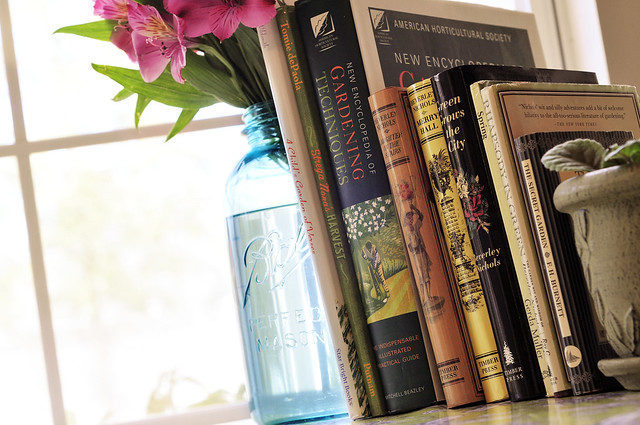
However, since I have one of you to thank for this book recommendation, and I want to keep the good times rolling, here are three more books for your reading pleasure.
//
//
Today, I’m giving you characters.
When I read novels what I want more than anything – more than a great plot or beautiful language – is character. I want human beings who are so fully realized, so perfectly flawed yet sympathetic, that I struggle to believe they have been created out of nothing more than the alphabet.
Cassandra Mortmain is a marvel of a narrator. She is the wonderfully awkward heroine of Dodie Smith’s 1948 novel I Capture the Castle . The incredible thing about this novel is that the narrator, who hovers somewhere between childhood and adulthood, does not know herself and yet she fully reveals herself to us. We have only her words, but we know things she is only slowly discovering.
This novel is sweet, funny, and over-the-top in so many good ways. We have a crumbling English castle, first love, eccentrics around every corner, and poverty that is a little worse than genteel. Cassandra, like the story she tells, is a gem.
And no bathroom on earth will will make up for marrying a bearded man you hate. – Dodie Smith
Next, I give you a character who is much darker and more mysterious. He is a young, Irish police detective, and he is the narrator of In the Woods by Tana French.
French writes what some have called “literary mystery thrillers.” Literary is a rather inadequate word, but what it should tell you is that French is an incredible writer. In particular, she has a gift for characters.
Although the plot will keep you turning pages late at night (my life pretty much comes to a standstill whenever French publishes a new book), if you value plot (especially those of the neat and tidy variety) you may be disappointed.
I think I love French’s books because, though they are atmospheric and wildly creative, I find them to be more honest than most mysteries. French gives us compelling characters and page-turning stories, but she does not pretend that all mysteries can be solved, that all questions can be answered, or that the past can always be known.
What I am telling you, before you begin my story, is this – two things: I crave truth. And I lie. – Tana French
I am always amazed that one small island can produce so many gifted writers. Here is another: the Irish writer Colm Toibin. Brooklyn: A Novel is told by Eilis Lacey. She is a young woman who has grown up in a small Irish town just after the second world war. Sponsored by a priest, Lacey leaves her family and goes, alone, to make a new life in America.
This is a quiet book. Beginning it, you may find it too easy to put it down and forget to pick it up again. Don’t do this: you are in the hands of a master. Turning pages you will begin to care for Eilis, you will see the world through her naive but curious eyes, and you will know, having turned the last page, that you have been richly rewarded.
‘She has gone back to Brooklyn,’ her mother would say. – Colm Toibin
Tell me, who are the characters you especially love?
You can find earlier recommendations here: week one, week two, week three, week four, week five, week six, week seven, and week eight.
by Christie Purifoy | Feb 23, 2013 | allergies, Books, Family, Food, Uncategorized
Food is my love language.
Isn’t that one in the book? No? Well, I’m convinced food is my love language. I know my mother loved me because she sometimes surprised me during the after-dinner homework hour by sneaking into my bedroom with chocolate pudding. Yes, Mom, I still remember the chocolate pudding.
I show my kids love by feeding them.
Which has, on more than one occasion, resulted in a call to 911 and an epi-pen. Which just goes to show that love is complicated.
//
//
Making something that is healthy, non-allergenic, and liked by all is my holy grail of cooking. Actually, it’s my holy grail of motherhood. But, like any epic quest, mine is marked by failure, disappointment, and only occasional victory. Like the knights of old, I am not giving up.
Books like these inspire me to get up and give it another try. Books like these remind me that food and its enjoyment are among the very greatest gifts of our creator.
//
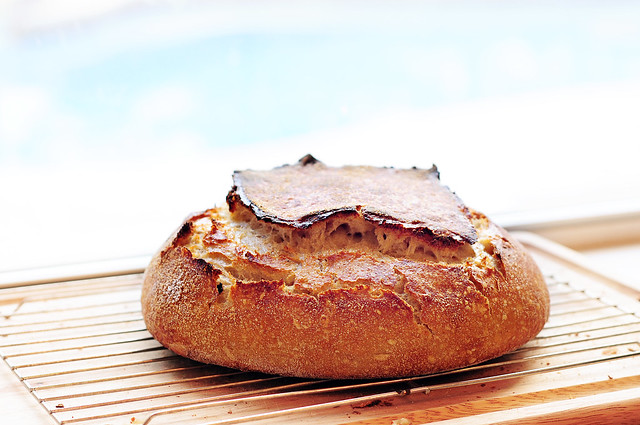
First, (for those whose taste buds have been set dancing by the photo above) is Tartine Bread by Chad Robertson. Yes, that photo shows actual bread baked by the actual me. In my actual home kitchen. And, it actually tastes even better than the picture looks.
In addition to the cookbook, you will need a digital scale and a cast-iron combo cooker (though I think a dutch oven would also work). Then, simply follow directions. Robertson takes us step-by-step from making our sourdough starter through his basic country loaf and on to variations that include everything from pizza dough to English muffins.
I am generally something of a disaster in the kitchen, but this book makes me look like I know what I’m doing.
//
Next, is a book I suspect many of you have read. It’s Animal, Vegetable, Miracle: A Year of Food Life by Barbara Kingsolver. If you haven’t yet read it, then I am thrilled to be the one to give you that final push. Because read it you must.
Do you like food? Do you like memoir? Then you will like this book. Kingsolver chronicles the year she and her family spent eating only locally grown foods, most of them foods they had grown or raised themselves. Kingsolver talks politics, global warming, and the state of American agriculture, but at the heart of this story is good food, family, and love.
This is a book about tomatoes. How we care for them. How we harvest them. How we spoon them out of jars in the middle of winter and remember warm, summer days. This is a book about bread. About what it does for our families when our homes smell of fresh-baked bread.
This is a book about celebration.
//
Finally, a new-to-me book I admit I’ve only just begun. Two chapters in, and I’m smitten. It’s An Everlasting Meal: Cooking with Economy and Grace by Tamar Adler. Generally, I won’t recommend a book I haven’t yet finished, but this is one of those books you start telling all your friends about before you’re even halfway through.
Adler is funny and wise. She begins with the simple act of boiling water, and I am now convinced that a big pot of bubbling, well-salted water is the start of all sorts of magic.
This is a book for those of us who love food but get bogged down in long, complicated recipes. It’s a book to make you believe that you, too, can create, not restaurant masterpieces, but the stuff of life. Good, nourishing food.
Which is, of course, the whole point.
by Christie Purifoy | Feb 9, 2013 | Books, Seasons, Uncategorized, Winter
Every winter I am surprised to remember that the return of the light is accompanied by the coldest weather. These days are snowier and chillier, but they are brighter, too.
Old, Pennsylvania farmhouses are known for their extra deep window sills. So, these days, instead of sitting in front of the fire, I am reading my book while perched on the sill of these floor-to-ceiling parlor windows. All the better to catch every ray of this golden, late-winter light.
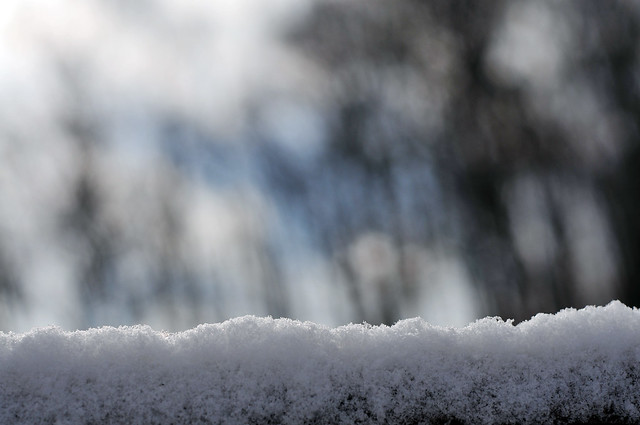
Appropriately, I’ve been reading The Palace of the Snow Queen: Winter Travels in Lapland by Barbara Sjoholm. Part travel memoir, part history, this book is magical and intellectual.
Inspired by her childhood love of the Hans Christian Anderson fairytale, Sjohom helps us see the beauty of a world that is almost (but not quite) in total darkness. This book reminds us how special snow and ice can be. It also asks hard questions about the intersection of tourism and indigenous culture. We may share Sjoholm’s fascination with the Sami people, the reindeer herders of northern Norway, Sweden, and Finland, but we are not allowed to forget that they too live in the modern world. After all, some of them still herd reindeer, but they do it with helicopters and snowmobiles.
I was out of sight of the Icehotel now, far away on the snow-covered still-frozen river, sliding along on my simple kick sled, no desire to turn back yet, into the wide world, rejoicing. – The Palace of the Snow Queen
I like to think of myself as someone who collects seasonal children’s books. I imagine pulling out a basket of warm-weather themed books on midsummer’s eve and books about autumn and back-to-school in September. Truthfully, except for a few Easter titles, what I have actually accumulated is a collection of Christmas and winter books that is threatening to take over our house. (Winter! I love you, I hate you, and I am always and forever inspired by you. One of the saddest seasons of my life? The two years I spent reading Gingerbread Baby and It’s Snowing!
 in Florida.)
This December we added A Day On Skates by Hilda van Stockum, and I am in love. The kids are pretty happy, too.
First published in 1934, this is the (delightful! enchanting!) story of a Dutch ice-skating picnic.
I’m sorry, do I need to say more? Are you not already rushing out to buy this book? Because, truly, can you imagine anything more wonderful than spending your school-day skating frozen Dutch canals with your teacher and classmates while stopping occasionally for adventures and warm snacks?
Well, if you think you can, then I dare you to read this book. Van Stockum was a painter before she was a writer, and the full-color, full-page illustrations are … well, I don’t know what to say except this: I want to live in them! I want to wear wooden shoes, I want to join in a school-wide snowball fight, I want to see my twin brother rescued from beneath the ice, and I want, oh how I want, to eat Snow Pancakes.
In that small country called Holland, with its many canals and dykes, its low fields and quaint little villages, Father Frost went prowling round one January night, with his bag full of wonders. – A Day on Skates
Tell me there’s no need to go on?
Okay, I’ll say this one thing more: I may include amazon links for convenience, but this is where you should be discovering and buying children’s books. Yes, amazon is convenient. Yes, amazon will save you money. Yes, the big-box bookstores have a train table that keeps your three-year-old happy. However, they also have case after case of Disney-themed this and Wimpy Kid-that, and I can practically guarantee they do not carry works of art your children will always remember. No one ever wanted to live in a Captain Underpants book.
Since I’m already on this soapbox can I recommend one of the greatest short stories ever written (and, surely, it is the greatest short story featuring snow)?
The Dead by James Joyce (I own this edition: Dubliners: Text and Criticism; Revised Edition (Critical Library, Viking) ) concludes the stories collected as Dubliners. If you’ve tried to read Ulysses or Finnegan’s Wake and are afraid – don’t be. This is realist fiction at its finest: highly symbolic but readable. It is the story of a middle-class holiday party. It is the story of a marriage.
Like all of Joyce’s work, there are quite a few allusions to nineteenth-century Irish history and politics. Don’t worry about all that. Your job is to enjoy the party. Feel nervous with Gabriel as he prepares his toast. Indulge his self-important fantasies about a night away with his wife, and feel his shock and pain when he realizes how little he truly knows of life, and love, and death.
Most of all, your job is to read the final paragraphs aloud. Slowly. Quietly. Close the door, if you must, and listen to these words as they float, gently, on the air:
His soul swooned slowly as he heard the snow falling faintly through the universe and faintly falling, like the descent of their last end, upon all the living and the dead. – “The Dead”
Find earlier recommendations here: Week One, Week Two, Week Three, Week Four, and Week Five.
