
It’s About Money, Except When It Isn’t

I’ve always had a tendency to let the mail pile up unopened (which means that we have realized, on more than one occasion, that we’re driving a car that may no longer be insured).
We put systems in place. For instance, a basket for recycling junk mail sits by the front door just beneath a tray for bills. I vow to do a better job, but I never quite keep up with the flurry of paper.
One particular unopened letter had been troubling me for weeks. The return address said Compassion, and “a message from your sponsored child!” was splashed across the envelope. I knew as soon as I pulled it from the mailbox that it was a note from our new Compassion child (I picked him from the lineup because he reminded me of my middle boy). He isn’t the only child we sponsor, so I knew the drill. I would need to write a letter introducing him to our family, and I remembered that it was customary to include a family photo.
It’s the photo’s fault. At least, that’s what I’d like to think.
As soon as I open this letter, I told myself, then I’ll have to add “take and print a family photo” to my to-do list. I felt tired just considering my to-do list, yet my perfectionism wouldn’t let me send a year-old photograph (because our baby boy has changed so much).
And so, I let the letter sit.
I kept spotting it. I noticed it every time I added a few more bills to the now-teetering pile in the tray. The guilt grew with the pile, but I couldn’t get past the need for a photo.
Until yesterday.
I shook my perfectionist, procrastinating self and opened the letter. Immediately, I noticed a small box with the prompt “Please pray for my family.” Within that square were these dictated words: “Please pray that my father finds a job and stops drinking.”
I was devastated. My chest hurt.
A heart-cry in a handful of words: how could I have let it sit unread?
Adding another Compassion child to our monthly giving was a financial stretch for us. However, I’ve found that opening my eyes just a little bit to the rest of the world makes it much harder to justify the ease with which I buy books. Or new boots for my daughter. Or another weekly dance class.
It’s about money. God has his eye on the poor, and I see them too. We both know that He’s given American Christians more than enough to wipe out mountains of misery, if only we would share what has never been ours to begin with.
Yet, believing it was just about money made it easier to leave that letter lying on the tray. Now I know: it’s about money (I say I care about the poor, so I better put my money where my mouth is), and it’s about so much more.
It’s about a small boy. One precious life. Only five years old, and yet he knows things that my own kids have never even imagined. I’m still trying to figure out how to share this prayer request with them. I don’t think that they have ever even heard the word drunk. Let alone seen it.
But this boy . . . oh how my heart aches when I consider what he has seen. What he is seeing even now as I type.
So, I’ll keep writing the checks. But now my checks go out dripping with prayer. Simple, nearly wordless prayers:
Jesus, Carlos, Jesus, Carlos’s daddy, Jesus, Carlos’s mommy, Jesus, Jesus, Jesus.
A Poem (And a Pretty Picture) for Your Monday
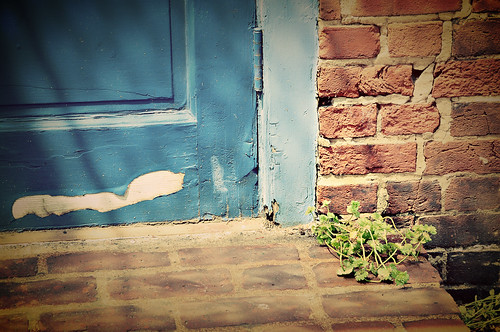
The muscles in my legs have been achy and sore for two days. No, I didn’t go jogging (horror!). I spent most of Saturday rearranging my books, and it seems I vastly underestimated the after-effects of shuffling books from shelves to floor and back to different shelves.
The big book shuffle was prompted by a single new bookcase. It arrived on Friday, packed in one slender yet unbelievably heavy box. On Saturday morning the three boys tackled it with their respective hammers (plastic for the two-year-old, which pleased him not at all).
Within half an hour I was standing in front of one of the loveliest sights I can imagine: pristine, empty bookshelves.
They didn’t stay empty long. I gathered up the piles of books which have quietly accumulated in the corners of my house, and, after much dusting and a thorough rearranging, discovered that I should have ordered two new bookcases.
No matter. I can’t think of a better way to spend a cloudy, drizzly Saturday than handling (and remembering) each of my books as I slide them into place.
It was only as I carried my poetry collection from family room built-ins to dining room shelves that my pleasure dimmed. I haven’t reached for any of these books in such a long time (not since my last Intro. to Lit. class), and I felt suddenly sad to think of so much treasure sitting untouched, collecting dust.
I had the idea, then, to share some of these poems here on my blog. I grant you, it’s very self-indulgent. But isn’t blogging always that, to some extent?
The thing I’ve long loved most about teaching is the simple act of sharing beautiful things. I’ve missed that.
So, without further ado, a poem for you (inspired by last week’s post on the magic of mirrors):
Miracle Glass Co.
Heavy mirror carried
Across the street,
I bow to you
And to everything that appears in you,
Momentarily
And never again the same way:
This street with its pink sky,
Row of gray tenements,
A lone dog,
Children on rollerskates,
Woman buying flowers,
Someone looking lost.
In you, mirror framed in gold
And carried across the street
By someone I can’t even see,
To whom, too, I bow.
– Charles Simic
This is a perfect ode, in my opinion, for kicking off plans to reacquaint myself with the poetry on my shelves. It reminds me that creating art is often as simple as reframing the everyday (as my sister’s photograph moves us to see peeling paint with new eyes).
Within the gold frame of a poem, the ordinary is transformed. Simic is right. It is a miracle.
Blowing the dust off of a poem and reading it, we bow to the vision it offers, we bow to its maker, the poet, and we remember our own maker, who created us to create.
Book of Quotations: Moonlight and the Memory of Pain

I keep a book of quotations. It looks exactly like any other journal, but it’s for a different kind of journaling. Journaling with the words of other writers, if you will. Here I scribble down quotations from all kinds of books: poetry, theology, memoir, literary theory, fiction, you name it. I write down anything I want to remember.
Sometimes I use these quotations later, in my own writing or maybe just in conversation. But, it isn’t really about utility. It’s about beauty. Language can be so beautiful it stuns. However, I am generally reading so much, so quickly that I need a way to hold on to those beautiful bits that I just can’t bear to let wash down the stream of words, words, words.
The purple fabric cover of my book of quotations has caught my eye this morning. Cracking its cover and skimming its pages, I rediscover this gem from George MacDonald.
In his classic fantasy Phantastes, first published in 1858, he writes words worth remembering:
” . . . I went on my silent path beneath a round silvery moon. And a pale moon looked up from the floor of the great blue cave that lay in the abysmal silence beneath. Why are all reflections lovelier than what we call the reality? – not so grand or strong, it may be, but always lovelier? Fair as is the gliding sloop on the shining sea, the wavering, trembling, unresting sail below is fairer still. Yea, the reflecting ocean itself, reflected in the mirror, has a wondrousness about its waters that somewhat vanishes when I turn towards itself. All mirrors are magic mirrors. The commonest room is a room in a poem when I turn to the glass. . . . In whatever way it may be accounted for, of one thing we may be sure, that this feeling is no cheat; for there is no cheating in nature and the simple unsought feelings of the soul. There must be truth involved in it, though we may but in part lay hold of the meaning. Even the memories of past pain are beautiful; and past delights, though beheld only through clefts in the grey clouds of sorrow, are lovely as Fairy Land. . . . The moon . . . is the lovelier memory or reflex of the down-gone sun, the joyous day seen in the faint mirror of the brooding night . . . .”
What do you see in the photo above?
Because we live in a world which privileges cold, hard facts, I imagine that each of us would claim to see only a reflection. The camera isn’t showing us the real things, the actual palm trees and beach balls.
I begin to wonder: is the reflection, the mirror image, actually less real? Less true?
I flip through the pages of an old photo album. I remember the pain and pleasure of those days, and I discover that MacDonald is right, those memories, the good and bad, are glossed with loveliness. Should I distrust this loveliness? Should I insist that the distance of years has distorted reality?
Perhaps the haze of beauty which covers my memories reveals the truth about my life in a way that immediate, lived experience cannot. Yes, pain is real and terrible, but it may be that in the mirror reflection of memory we can glimpse something important that is beyond our comprehension in the moment.
When pain is part of a good and beautiful story it can be transformed. It can become moonlight.
Yes, I love the direct, unmediated happiness of sunshine. Still, I am grateful for the subtle beauty and the reflected glory that belong only to moonlight.