
Advent (Day 4)

The Bible is an often cacophonous, centuries-long conversation with God about the things of God, but some of its most powerful voices have spoken to us out of darkness.
There is Job, who understood that God himself had “blocked” his way and “shrouded” his paths “in darkness” (Job 19:8).
There is Jeremiah, lifelong witness to unimaginable chaos, suffering, and loss.
Both stared into the darkness of their lives, darkness willed by the God they faithfully served, and saw … something good. But also something so mysterious they could not name it.
God spoke to Job from the darkness of a storm, and Job received wisdom, like a spark of light. “I know that you can do all things; no plan of yours can be thwarted,” Job responded. “Surely I spoke of things I did not understand, things too wonderful for me to know” (Job 42: 2,3).
With the sound of weeping in his ears, Jeremiah received a glorious yet inexplicable vision: “The Lord will create a new thing on earth – a woman will surround a man” (Jeremiah 31: 22).
In darkness, they were given Light.
And we who live on the other side of the mystery, we who are citizens of a kingdom Job and Jeremiah could only dream of, who are we to despair? Who are we to lose hope?
We, too, are promise-bearers. For, we know: He will come again.
“And we have the word of the prophets made more certain, and you will do well to pay attention to it, as to a light shining in a dark place, until the day dawns and the morning star rises in your hearts.”
2 Peter 1:19
To keep up with each post this Advent season, visit the facebook page for There is a River and click “Like.” You can also receive each post delivered straight to your inbox by clicking here to subscribe by email.
Advent (Day 3)
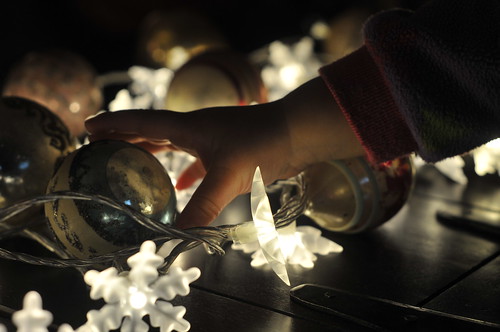
What is the point of darkness? Have you ever wondered?
In the beginning, we read, God created light, and he separated the light from darkness. Why didn’t he banish darkness?
We might argue that darkness is not inherently good or bad. It simply is. But something deep within us fears otherwise. One of the plagues sent to torment the Egyptians was a plague of darkness, after all.
If light is good and life-giving (in the natural world and in metaphor), I like to remember that it is most beautiful when it appears in darkness.
Each December at their Chicago preschool, my children walked an advent spiral. The usually bustling preschool classroom was silent and dark. The only light came from the candle burning at the center of a child-sized evergreen spiral on the classroom floor. In turn, from smallest to biggest, each child carried an apple, hollowed out to hold a candle, from the spiral’s entrance to its heart. Carefully lighting their candle (with the help of a preschool teacher dressed as an angel), each child walked slowly out again, depositing their candle along the spiral until the room filled with candlelight.
It always felt, to me, like one of the most spiritually profound moments of our year. Perhaps only excepting the year my then-two-year-old daughter caught her hair on fire. Well … maybe that year too. The angel did her job, and, ultimately, no little girls were harmed in the making of this magical, advent moment.
But, oh, those lights … we needed the darkness in order to see their beauty. In order to appreciate their message of hope.
For a while, we may sit in total darkness. Darkness, however, is never the end of the story. Ours or the world’s.
The darkness will not last forever. Morning will come. Your Light will come.
Advent (Day 2)
In keeping with my “poem-each-Monday” tradition, here is a poem for you on this first Monday of Advent.
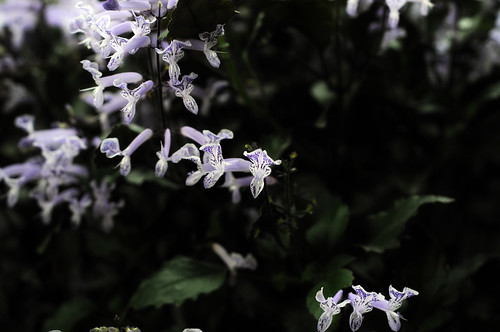
These lines come from T. S. Eliot’s Four Quartets. They remind me of this Advent paradox: in a wintery season of death and darkness we perceive birth and new life. Midwinter spring, indeed.
from “Little Gidding”
Midwinter spring is its own season
Sempiternal though sodden towards sundown,
Suspended in time, between pole and tropic.
When the short day is brightest, with frost and fire,
The brief sun flames the ice, on pond and ditches,
In windless cold that is the heart’s heat,
Reflecting in a watery mirror
A glare that is blindness in the early afternoon.
And glow more intense than blaze of branch, or brazier,
Stirs the dumb spirit: no wind, but Pentecostal fire
In the dark time of the year. Between melting and freezing
The soul’s sap quivers. There is no earth smell
Or smell of living thing. This is the spring time
But not in time’s covenant. Now the hedgerow
Is blanched for an hour with transitory blossom
Of snow, a bloom more sudden
Than that of summer, neither budding nor fading,
Not in the scheme of generation.
Where is the summer, the unimaginable
Zero summer?
– T. S. Eliot