
What Does it Feel Like to be Healed?
I have prayed for healing.
I have prayed for symptoms to disappear because that is what healing meant to me, but deep within I have suspected that my prayers were somehow too narrow. Too limited. How, then, should I pray? Is true healing more than the absence of some symptom?
I prayed that my boy would be healed. I prayed that food would no longer squeeze the breath from his lungs. God heard my prayer. When his throat began to swell, and I had forgotten the epi-pen, a stranger’s hand reached out with the medicine he needed.
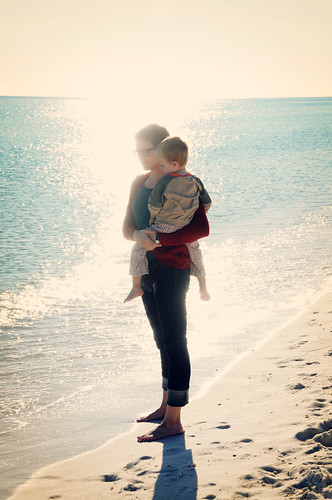
What does it feel like to be healed? It feels like being held.
I have felt the breath squeezed from my own lungs. For one long, hard month I have despaired of ever again feeling strong. And I have prayed for healing.
I prayed for breath when what I needed was hope.
This is not a less-than prayer. I do not redefine healing in order to make it seem more possible. Lungs are made strong, allergies do disappear, the cords of cancer and disease are broken every day, but God can do so much more than that.
His healing is not limited to our bodies. His healing is not given only to those whom doctors will pronounce well.
To be healed by God is to know that death is a lie. That there is nothing to fear.
“He reached down from on high and took hold of me; he drew me out of deep waters.” Psalm 18:16
To be held in arms of love. That is what it feels like to be healed.
Book of Quotations: Notes from a Sickbed
I’ve been sick. For a month. I’m worn out with it.
Worn out enough to have spent the last few days in bed. Worn out enough to have finally called the doctor. Having filled the prescription he gave, I can breathe again. Though I am still tired. And each breath has that ache-y, medicinal twinge suggesting that my body knows it isn’t yet breathing under its own strength.
To be confined to a sickbed feels like the ultimate waste. Productivity ceases. To-do lists are left undone. One can no longer give anything. Confined to bed, receiving is the name of the game.
In other words, it isn’t only the pain of illness that makes it so uncomfortable.
When sick, it is no longer possible to do; the challenge is simply to be. I focus on each breath in and out. At first, this brings fear. Later, comfort. To labor at something which is usually instinctive is to recognize that it has always been, will always be … a gift. Breath. The presence of God. Beyond us and within us.
When we are sick, the world shrinks. I have a book. The view from my bedroom window. A slowly ticking clock. This is life condensed. Which means there is more to notice, more to observe, more to think about in one minute of this life than in an hour of my usual busyness.
And that is a good thing.
Still, I hate the phrase “look on the bright side.” It suggests a yin-yang view of life that I simply can’t accept. I think you know what I mean: every cloud with its silver lining, every light with its shadow. No thank you.
Shadows only make me dream of a world without shadow. Of light without darkness. Of a day when “the moon will shine like the sun, and the sunlight will be seven times brighter … when the Lord binds up the bruises of his people and heals the wounds he inflicted” (Isaiah 30:26).
But, in the meantime, I do marvel that anything good can emerge from sickness. From brokenness. From darkness. This isn’t to say that “it’s all worthwhile” or “it happened for a reason.” Those are platitudes that do little justice to the utter wrongness of sickness. And brokenness. And darkness.
No, when I acknowledge the good gift I am marveling at the fact that darkness is never all. There is always something more. Something beyond.
For me, now, it is only a few words read in a book in the middle of the afternoon while I lie in bed and listen to the children scream their far-off screams. They are not, in this moment, my responsibility.
And so, released from every responsibility that says do, I lie still and read a description of wolves crying under a full moon in Yellowstone Park. I’ve never heard a wolf’s cry, I don’t know if I ever will, but now, having read these words, I can carry that cry with me for the rest of my life:
At the same time other wolves joined the first two, and we heard … the full-throated quiver of the pack. It haunted everything it touched, sanctified it. It rolled down the mountains and onto the plains and the bison heard it, the ground squirrels heard it, the crows nesting in the trees heard it. Mary began to tear.
“We are alive,” the wolves said. “And the world is beautiful.”
(from Eternal on the Water by Joseph Monninger)
What Happens Next?
“Mom,” she asks, “What happens next in the story?”
I’m distracted, brushing my teeth, checking the clock. I realize that we only have 5 minutes before we need to leave for church. It takes more than 5 minutes to strap three kids into the car. At least, it does if one of those kids is a two-year-old who processes every instruction as an opportunity to run and hide.
“What story?” I ask.
“You know. The story at church. What happens after Christmas? What happens with Jesus?”
I rinse my mouth and give her a look of confusion. She says, “You know, the story! The angels and the stable and the star. What happens next?”
Finally, I understand her question, but I fumble for an answer. I may have an advanced degree in stories (I’m an expert! An authority!), but it only takes a child’s simple question to deflate those ego-balloons.
“Ummm … well … Jesus grows up. Then he starts teaching and performing miracles.”
Even I know my answer isn’t quite adequate, but the girl is thoroughly unconvinced. She huffs and rolls her eyes, and I know she thinks I still don’t understand.
But, I do. I do.
I know that it takes readers years to learn and even more years to appreciate that stories are not simply the sum of their plot developments. You could summarize a book by Agatha Christie and one by Virginia Woolf in the same number of sentences, but which summary would leave the most unsaid? You don’t need to have read Mrs. Dalloway to know the answer, I think.
“What happens next?” is not the only question we should ask. Why and how may be even more important.
I understand that my daughter, a new reader, is looking for excitement. We’ve had the star and the stable, the angels and the shepherds. What’s next? What’s next? Keep it coming! Keep it coming! Or, as her five-year-old brother might say, “Is there another picture in this book?”
We do get a few pictures between Christmas and Easter. Fishes and loaves. A broken jar of perfume. A man high up in a tree. Still, they aren’t quite as stunning as that stable or that cross. Neither the beginning nor the end, this is merely the hum-drum middle, right?
I’m not so sure. The middle may be less of a set-piece, less likely to be carved in wood or clay, but it’s the part that gives me the most hope for my day-to-day.
We live most of our lives in the middle. Between set-pieces. The funeral. The child’s birth. The phone call. The move. Those things happen, and they look like peaks and valleys as we glance back in time, but we mostly live in the in-between.
Jesus breaking bread. Jesus talking. Jesus healing. Jesus praying. That’s what the middle looks like. It’s beautiful and breath-taking in its own way. We only need to slow down enough to see it.
It’s like I always told my students when they first read Virginia Woolf. “Don’t rush. Take your time,” I would say. “If you hurry through only looking for what happens next you’ll turn the final page and realize that you’ve missed the story.”
I don’t want to miss the story. I want to live it.