by Christie Purifoy | Mar 22, 2012 | Faith, God's promises, Jesus, Uncategorized, Waiting

That’s quite a confession, isn’t it? I may as well admit to disliking puppies.
Slowing down, living in the moment, appreciating the ordinary gifts of each ordinary hour: those aspirations have become a kind of religion. Widely admired if less widely achieved.
Like most religions, I suppose, there’s a commendable seed of truth. I do believe that the moment matters. Of what else is our life composed? Whether I’m considering growing children or changing seasons, I want to notice. To appreciate. To pause and give thanks.
And yet, I wonder … why do we find this so difficult? Why is there always something inside of us looking ahead, peering around the bend? Why the inner voice always asking “what’s next”?
I think this voice won’t ever fully let us go because we are not living in some eternal moment. We long for that. We dream of it, but we don’t inhabit it. Not yet, anyway.
Our lives are journeys. Our lives are stories. There are beginnings and endings, narrative lulls and cliffhangers. Mountains and valleys.
To look ahead, to anticipate all that’s yet to come … this is the substance of faith. This is the shape of Christian spirituality.
We pick up our crosses and follow One worth following.
We run with perseverance the race marked out for us.
We strain our eyes looking for promised lands, for God’s kingdom breaking in, for creation made new.
The moment may be good. It may be very, very good. But we know that we’ve been promised even more.
Glorious anticipation.
“All I have seen teaches me to trust the Creator for all I have not seen.” – Ralph Waldo Emerson
by Christie Purifoy | Mar 19, 2012 | allergies, Faith, God's promises, healing, Jesus, Uncategorized
I’ve been so sick for so long that looking back over the past few months is like staring into a dark tunnel. I’m just glad to be at the other end.
I’m a little too worn out to fully analyze the experience. Maybe some things are meant to be endured and survived rather than understood.
Still, I do know that there is a metaphysical, spiritual conundrum that we never quite escape in this life. C. S. Lewis called it the “problem of pain.”
Why do we get sick? Why do we hurt? And, hey, if we’re going to ask these questions why not go all the way … why do our babies get sick? Why do so many children suffer?
Of course, I don’t know how to answer those big questions. Does anyone? Lewis himself offers a bounty of wisdom, but it isn’t as if even he lets us off the hook. We won’t find the ultimate answer in a book. I believe we’ll find it one day in a face. Jesus’s face. But, I haven’t yet looked into those eyes, so, for now, it’s all hope.
Even if we can’t fully answer the “problem of pain” on this side of life, I don’t think we’ll ever get close if we ignore the little problems. The everyday pain.
When Jesus said to pick up our crosses and follow him, I don’t think he was telling us to suffer in silence. To just shut up about it already! Though, I admit, I sometimes picture him rolling his eyes in response to my whiny prayers. But, in my mind, it’s a fond exasperation.
That picture – of someone picking up their cross and following – is kind of nice, actually. As if Jesus were telling us that even our pain is a part of the story. Even our pain matters in some way. Pick it up, bring it along, I’ll take care of it, he says. Maybe today, definitely someday, it will be dealt with.
I won’t forget the tears you’ve cried.
So, what do we do in the meantime?
I’m not sure, but for the first time in months, I’m taking a good look around.
By the light at the end of the proverbial tunnel I can see blue skies. I can feel a warm breeze. And the scent blowing across my face is the heavy sweetness of backyard orange blossoms.
Here is another moment that begs not to be analyzed. It’s meant only for joy.

by Christie Purifoy | Nov 17, 2011 | Family, God's Love, Grace, Jesus, motherhood, Scripture, Stories, Uncategorized

A brief story about a Purity Ball in my Sunday newspaper catches my attention. There is an image (a church altar decked in lace like a bridal veil) and there are words spoken by a twelve-year-old girl (“I’m saving my purity for my husband”), and I feel troubled, as if there is a small pebble in my shoe.
I don’t know why I am troubled. These are my people, after all. We speak the same church-y language, we love the same Lord. And goodness knows we need more fathers like this one, fathers who dance with their daughters and whisper prayers over their heads.
It would be easy to keep turning the pages, forget the nagging pebble, but I do have an eight-year-old daughter, after all. I hold the paper still and say to the sky, “Lord, do you have wisdom for a firstborn girl raising a firstborn girl? I’m troubled, and I don’t know why.”
And I can’t say if it’s an answer to my prayer but what comes to me is a story: the woman at the well. The woman with five husbands and one who wasn’t even that. Considering her, I decide that she wasn’t created for a husband (or five). She was created for Jesus.
In fact, she was so highly esteemed by him that Jesus chose her to be the first to hear his earth-shattering news: the Messiah you have longed for is here. I am He.
I want to take this lovely twelve-year-old girl by the hand, look her in the eyes, and try to explain (but how to explain?) that purity isn’t some thing wrapped up in a box. It isn’t a commodity exchanged for a price. It’s a fire, it’s a light, it’s a fountain, and, yes, it turns the values of this world upside down because it’s holy and it’s a sacrifice.
What I would try to say is something like this: purity is a renewable gift, not a thing to grow dingy and worn (though I’m not quite sure who is the giver and who it is that receives, is it me? Is it Jesus?).
But the best news of all? Husband or no, you are invited to live the kind of love story in which even a prostitute can be the belle of the ball.
So, dear little girl, may your light shine, may my light shine, may the light given my daughter and my sons shine and shine. For He is ours, and we are His.
Good news.
by Christie Purifoy | Nov 14, 2011 | Faith, Poetry, prayer, Uncategorized
For you on this Monday: a sonnet from Irish farmer-turned-poet Patrick Kavanaugh.
I suppose there are those who might find heresy in this poem. “Pantheism,” they would say.
I don’t defend the idea. If God is everything and everything is God then what good is God, I wonder? And yet, I do not think that this is a heresy strong enough to deserve much disapproval (at least not today in the United States). We have silenced nature very effectively with our parking lots and our strip malls, our corporate ladders and our electronic shadow selves.
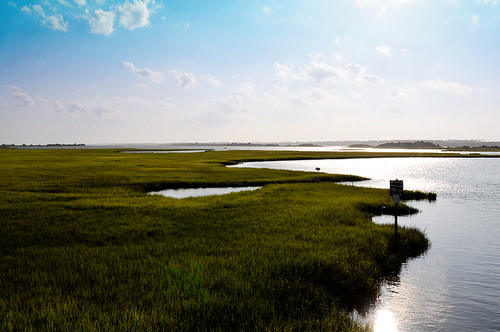
This poem reminds me to listen for the voice of God whispering all around.
I can’t prove that His is the voice you hear in water and wind. But, to borrow Kavanaugh’s words, some arguments aren’t meant to be proven.
Canal Bank Walk
Leafy-with-love banks and the green waters of the canal
Pouring redemption for me, that I do
The will of God, wallow in the habitual, the banal,
Grow with nature again as before I grew.
The bright stick trapped, the breeze adding a third
Party to the couple kissing on an old seat,
And a bird gathering materials for the nest for the Word
Eloquently new and abandoned to its delirious beat.
O unworn world enrapture me, encapture me in a web
Of fabulous grass and eternal voices by a beech,
Feed the gaping need of my senses, give me ad lib
To pray unselfconsciously with overflowing speech
For this soul needs to be honoured with a new dress woven
From green and blue things and arguments that cannot be proven.
– Patrick Kavanaugh
by Christie Purifoy | Nov 4, 2011 | Jesus, Scripture, Uncategorized

How’s that for a title? Did it draw you in? Turn you off?
To be honest, I’m trying not to care whether or not His name is an effective lure for a blog post. I’m trying not to care because I’ve realized something important: it’s all about Him, but I make it about so many other things.
I’ve tended to think that this is a problem for “those other” Christians (and, I promise you, there will always be “others” in this gorgeously diverse body of Christ).
I point my finger at an earlier generation of believers and say, “Thanks to you, too many people in this country think Christianity is about right-wing politics, pseudo-science, celebrity preachers, and churches that look like clones of corporate America.” I may be the quiet, introverted type, but I’m quite good at pointing fingers, even if only in my own mind.
However, I’ve been convicted (a heavy, old-fashioned word, right? Yet, I think it’s the only one to use). I, too, have made this believing life to be about so many other things: social justice, creation care, orphan care, free-trade coffee … well, you get the idea.
Surely those are good things? Justice for the poor, caring for widows and orphans: aren’t these necessary components of a religion that pleases our maker?
Yes, I’m quite sure that they are. I’m not about to buy chocolate harvested by trafficked African children, and the grief I personally feel over abortion and capital punishment can’t be untangled from my Christian spirituality.
And yet … I’m beginning to see how a commitment to good things (to causes, to ideals) is not exactly the same thing as a commitment to Him. To Jesus. One certainly flows from the other, but they are not interchangeable.
If someone asks, “What is Christianity all about? What does it have to offer?” the right answer is “Jesus,” not “feeding the hungry” (though that doesn’t, for one minute, let me off the hook for feeding the hungry).
I pray that my life speaks on behalf of justice for the least of these. I must do (and keep on doing) some serious self-reflection about the size of my house, and the overflowing state of my children’s toyboxes (not to mention my own closet). In my view, following Jesus demands these responses. Yet, I can no longer live as if this is the heart of the Good News that Jesus came to preach.
The treasure we’ve been given, the treasure we should be proclaiming, the treasure we should always be giving away … is Jesus himself. Emmanuel. God with us.
I have hardly begun to see how this Jesus-centered faith will reveal itself in my life. Is it only semantics? What, really, needs to change?
I can point to small things. Reading the Bible with my kids, I try not to reduce the story of Noah and the ark to a moral lesson about obedience or trust. Jesus told us that Scripture was all about Him, and I want to take that seriously. I want my kids to see Noah and his ark, not in isolation, but as a part of one beautiful, world-changing Jesus story (thank you, The Jesus Storybook Bible!). I’m also grateful to attend a church where the Eucharist (Communion, Lord’s Supper) is not an afterthought but the highlight of our weekly gathering. The sharing of this Jesus-meal is the purest, most compelling sermon we can preach. It communicates perfectly to seeker and believer, child and adult.
I sense that there’s more … much more. What a relief to know that this is not merely one more theological knot to untangle. This is not one more item to check off of some spiritual to-do list.
This is far more personal because it’s all about a person; it was, is, and always will be about the One who sits enthroned. Jesus.
by Christie Purifoy | Oct 28, 2011 | Chicago, Community, Faith, Florida, Seasons, Stories, Uncategorized
I believe in stories more than advice. In other words, I believe that a light is shined on our way forward, not when we finally hear the exact, right piece of advice, but when someone shares their story with us.
True stories contain all of the messy, untranslateable details of a life. Somehow, they also point us toward the maker of life.
I wish I could tell you how to live without the kind of community I described earlier this week. I wish I could tell you how to get it back. I even wish I could tell you that developing that kind of community in your own setting is the most important use of your time. But I can’t tell you these things.
If this whole Jesus-following-way-of-life is truly a relationship (as I’ve been hearing all my life) then we need to stop comparing our circumstances with everyone else’s. My marriage to Jonathan is fifteen-years-old (or fifteen-years-good), and it makes no sense for me to look at those still-awkward newlyweds and wonder why our lives are so different. Other than the fruits of the spirit, I’m not sure there are many things we can point to in order to say “that is a good Christian life” and “that is not.” At times Jesus walks us through joy and other times he walks us through trouble, but we can be confident in both that he has not and will not abandon us.
I lived in community for ten years, and it was good and it was painful, and I hope I haven’t said goodbye to that way of life forever. I could beat my head against my Bible wondering why my life no longer looks like that and how to get it back, or I can accept that when God empties our lives he also fills them up again. Not with the things we are missing, necessarily, but with himself.
In this world, we are wanderers. And that is not always a bad thing, not always a sin thing. We can wander quite a distance pursuing the good things of God’s kingdom on earth. Still, there’s little rest in wandering, and God knows we need rest. But where to find it?
God’s people “wandered over mountain and hill and forgot their own resting place” (Jeremiah 50:6).
Sometimes we need silence and emptiness, loneliness and barrenness in order to remember. We need winter.
The four walls of my suburban existence can feel like a prison, but they have been just the thing for feeling the heavy, holy pressure of God’s hand on me.
“You hem me in – behind and before; you have laid your hand upon me. Such knowledge is too wonderful for me, too lofty for me to attain.”
Psalm 139: 5-6
