by Christie Purifoy | Feb 21, 2012 | allergies, Art, Food, God's Love
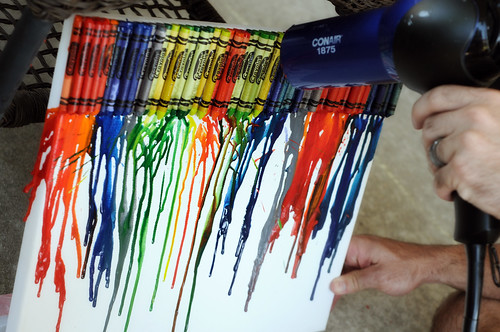
I’ve been sick and in bed a lot (Florida’s motto should be The Pollen State) and dreaming of everything I want to do when I’m feeling better. You know, practical, productive activities like cleaning my house, making dinner for my kids, and organizing my desk.
I kid! I’ve actually been dreaming of the wonderful and utterly nonessential. Things like making my own sourdough bread and picking a bouquet of teensy flowers for my daughter’s dollhouse. Oh, and writing out my favorite recipes to fill an antique recipe box. Why? Because it’s prettier than my binder full of recipe clippings, that’s why.
Illness has stripped away my ability to be energetic and efficient, but I am not daydreaming about regaining my productivity. I am daydreaming about Folly.
The capital F is important. Do you know about Follies? Those small architectural oddities which dotted the landscapes of eighteenth-century British aristocrats? If you’ve seen the latest film version of Pride and Prejudice you know what I’m referring to. Elizabeth and Darcy exchange words when they take shelter from the rain in a miniature reproduction of a Greek temple. That is a Folly with a capital F.
It serves no purpose. It has no point. It is as if those who built them said, “I am going to create something beautiful. And, then, I am going to look at it.” That is all.
We can easily criticize the Folly (and the one who built it) for its ridiculousness. Its wasteful extravagance. What is the point? What does it do? Aren’t there better uses for your time? Your money? Your life?
I have no desire to defend those eighteenth-century aristocrats. Is it a coincidence that this century ended in revolution or the threat of it all around the globe? Probably not.
Lying in my sickbed, however, I find a lot to like about the idea of Folly with a capital F. Folly, as it appeals to me, has more to do with beauty than foolishness. It means acknowledging that life is not Life if it is all efficiency, productivity, and utility. It must also make room for beauty, creativity, whimsy, and delight.
For homemade sourdough bread. For handwritten recipe cards. For tiny tabletop bouquets bestowed on a family of dolls.
For art.
For music.
For dance.
For embracing the Creator in whose image we are made.
“How priceless is your unfailing love, O God!
People take refuge in the shadow of your wings.
They feast on the abundance of your house;
you give them drink from your river of delights.
For with you is the fountain of life;
in your light we see light.”
(Psalm 36:7-9)
I’d love to know: what is bringing you delight during these late winter days?
by Christie Purifoy | Feb 9, 2012 | Books, Food

I write a great deal about books on this blog. You know that I love Irish poetry and the novels of Virginia Woolf. You know that I love Harry Potter and the Hunger Games. You may not know that I love well-written detective novels like those by Margery Allingham (past) and Kate Atkinson (present).
A significant sub-genre in the large category of Books I Have Loved is Food Books. This includes my childhood favorite Little Farmer Boy, by Laura Ingalls Wilder. Even today, I could happily read those descriptions of nineteenth-century farm meals over and over and over. Wilder can make me drool even for headcheese.
It also includes Food Memoir. This seems to be a very popular genre today. I haven’t actually read many of these books, but I have noticed whole stacks of memoirs with words like cupcake, lemon, chocolate, etc. in their titles. My own favorite food memoir may be Down the Kitchen Sink, by Beverley Nichols. His gardening books are the best, but I love Nichols no matter his subject. He’s sentimental, nostalgic, and rather snobbish (well aware of his own foibles, he would no doubt prefer the term “romantic”), but he’s witty, supremely British, fond of name-dropping and more comforting than the most comforting comfort food.
Lastly, there are cookbooks. I read them like novels and am drawn both to the glossy and new (Ina Garten! Babycakes!) and the vintage and worn (The Kitchen Garden Cookbook with watercolor illustrations by Tasha Tudor!). One of my all-time favorites for reading pleasure is Apples for Jam. The recipes are organized by color (pink! green! white!) rather than food type or meal. It’s totally impractical and wonderfully inspiring.
Last spring, I inherited (via estate sale) a whole stack of vintage cookbook treasures. When I paid for them, the daughter of their previous owner sighed and told me that her mother used to read cookbooks like novels. I told her I’d be keeping them on my bedside table for just that reason.
My favorite of her books is The Margaret Rudkin Pepperidge Farm Cookbook. The title may sound corporate and rather soul-less, but if you could hold it in your hands you would know right away how wrong that first impression is. This is a hefty, hardback covered inside and out with delicate ink drawings, many of them in full technicolor glory. Originally published in 1963, mine is the 1965 edition.
It is part cookbook, part memoir (as the best cookbooks usually are), and describes the life, times, and food of Margaret Rudkin. Apparently, Mrs. Rudkin was inspired to begin baking and selling Pepperidge Farm bread because of her child’s food allergies. Thus, she is dear to this mama’s heart.
Part One of this book describes Mrs. Rudkin’s childhood in a New York City brownstone. It seems they ate a lot of soup and fish. I might try the recipe for Strawberry Soup. Likely, I will skip the Pickled Lambs’ Tongues.
Of course, I also enjoy actually cooking. And certainly, I love to eat. Still, one can only cook or eat so much. But reading … ah, reading. With books I am never sated.
Do any of you share my love for cookbooks and books about food? Any recommendations? I’m always hungry for more.
by Christie Purifoy | Nov 10, 2011 | allergies, Community, Faith, Family, Food, God's Love, grief, healing, Jesus, motherhood

On Friday, our weekly pizza-and-a-movie night had to be postponed (and, yes, for those of you wondering, I make two: one deliciously normal for four of us, one dairy-free, wheat-free and “pizza” in name only for the middle child).
This middle child, our accident-prone five-year-old, had to be taken to the emergency room after a fall onto the cement floor of our garage. He came home late that same night happy to show off his new plastic dinosaur and the half-dozen staples on the back of his head.
I still remember, years ago, the preschool teacher who told me that if any child was going to fall into a puddle or trip on the curb it would be my son. Always. This has never stopped being true.
Twenty-four hours later, three of us kneel to receive communion. We prepare to remember death and taste resurrected life while the boy so recently knitted back together stands behind us. The boy who knows what death tastes like better than any of us. He does not yet receive the elements, but he is always given a short blessing, a gentle hand on his head.
Our servers are an elderly couple unfamiliar to me. They must be Sunday-morning regulars moonlighting at our Saturday-evening service. The husband places his hand on my son’s head and leans in close. He prays and prays until it seems that the attention of a whole room has condensed and fixed itself on this prayer for one small boy. I don’t remember a communion blessing that ever continued so long.
It is long enough for this memory: I am seven-months pregnant with my miracle baby, my-sewn-in-tears-and-reaped-in-joy son. I am filled up with a baby and with fear. Having waited so long for him, I am sure that this gift cannot be given with no strings attached. There must be some price, in pain, that I must pay. Until someone touches my own head and prays for me, and I see … well, I hardly know what I see, but it is as if my unborn son and his maker are alone together. Then I understand that I have only a peripheral role in the relationship between them, and I see that my love is small and weak compared with the love God has for the child he’s made.
Kneeling at the communion rail, I can see that the young couple next to me are also watching my son and the gray-haired man. I can see tears in her eyes and feel them in my own, and I know that this, this, is what it means to live in a beloved community. We have been so well-loved by God that our hearts break for how he loves everyone around us. We are loved, and we are loving, and our hands touching broken heads and fearful hearts are the hands of Jesus, always.
And the heavy burden of love that I carry for my son is shared. It is not, has never been, mine alone. Of course, my husband shares it, the firstborn (who runs to her room weeping as the car leaves for the emergency room) shares it, but Jesus also shares it and his beautiful church shares it.
We are a beloved community.
by Christie Purifoy | Oct 10, 2011 | Art, Food, Poetry
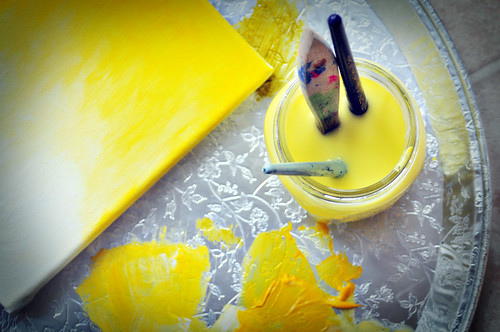
This is the first (and best) of all refrigerator poetry. It reminds me that the line between the mess of everyday and the wholeness of art is sometimes very slight. And yet, there is a line. Transforming ordinary raw materials (a pigment, a word) is not as easy as it looks.
If the raw material is depleted or broken, what then? Light from darkness. Beauty from ashes. Is it possible?
Those are cosmic considerations. This … well, this is more like a post-it note turned poem. And yet, when Williams turns the ordinary into something lovely, I perceive a giant’s theology on a dollhouse scale.
This Is Just To Say
I have eaten
the plums
that were in
the icebox
and which
you were probably
saving
for breakfast
Forgive me
they were delicious
so sweet
and so cold
– William Carlos Williams
by Christie Purifoy | Oct 7, 2011 | Blog, Food, God's promises, Seasons, Writing

It’s a mystery. One day (in a succession of many, many such days) you are a still and brackish puddle of water. No movement. Not much life. Then, something imperceptible happens. Perhaps, Someone breathes just a bit of Himself over the stillness? And the still puddle begins to trickle. It’s no river, certainly, but there is just a hint of movement, just a hint of renewal. Some fresh spring has begun to flow.
Nine months ago I began writing a story. My story. For the past five months the draft of that story has sat, locked in my computer, untouched. But this week I opened it up again. I started rewriting, tweaking, adding new thoughts.
It feels good to be at work again.
The only problem is that I’m feeling, here at the end of the week, just a bit dried up where words are concerned. Perhaps it’s only laziness, but I feel better remembering George MacDonald’s words: “Work is not always required. There is such a thing as sacred idleness.”
I’m giving myself over to idleness for the next few days. Let’s hope it’s of the sacred sort.
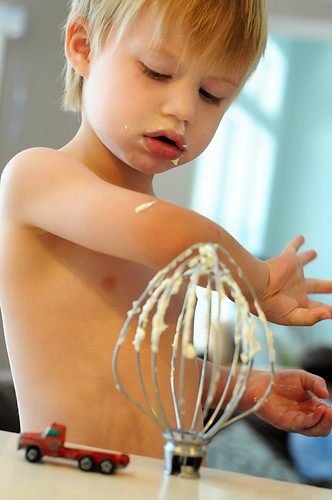
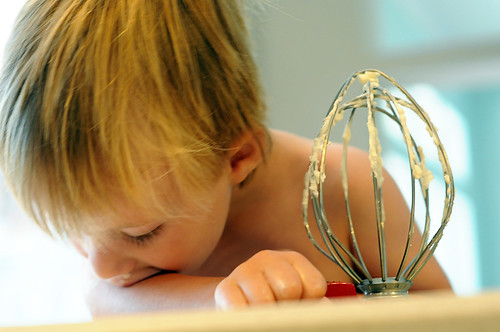
Meanwhile, since I have few words of my own today, here are the words (and a few images) I’m carrying with me into this weekend:
“I am the Lord your God, who brought you up out of Egypt. Open wide your mouth, and I will fill it.”
Psalm 89: 9-11
by Christie Purifoy | Aug 5, 2011 | allergies, Family, Food, healing, prayer
I fear that too many of us approach prayer with a mental picture of ourselves making a laborious attempt to come before God. Or, maybe we have a picture of ourselves trying and mostly failing to get God’s attention. Either way, the effort is all ours. The distance between heaven and earth appears too big to bridge, and our burdens seem trivial. They are dwarfed by God’s vastness, and they are lost in the cacophony of prayers being made across the planet at any given moment.
I’ve learned that prayer is not about little people waving their puny arms in God’s face. Nor is prayer like my own small voice pushing aside all others in order to make its way into God’s ear.
Rather, prayer is like a river. It is always flowing, and we are not its source. Its source is the Christ “who was raised to life,” for we know that He “is at the right hand of God . . . interceding for us” (Romans 8:34).
To pray is to step into the rushing water.
Even the words we say are not our own. We pray, like Christ, “Abba, Father.” Instead of distance there is the intimacy of family.
And when we have no words? We groan, but even in this we are not alone. Our groan joins that of creation (and who can doubt that creation groans?). Even better, our groans are echoed in God’s own heart, for the Spirit “intercedes for us with groans that words cannot express” (Romans 8:26). Our pain, our uncertainty transformed by God himself into powerful, purposeful prayer.
Quieting myself, I can just hear the sound of the river. It is the sound of One singing over us, and His voice “is like the sound of rushing waters” (Zephaniah 3:17, Revelation 1:15).
How do we find this river? How do we hear its voice? And, most importantly, how do we jump in?
I’m not sure that I’ve figured it out. All I know with certainty is that the river is there and sometimes it finds its way to me.
This week it found many of us at a monthly women’s worship service focused on the arts. Women sang, women danced, women spoke, and women painted. Yes, painted.
Some of us took Sharpie markers and wrote our prayers on one of several large, blank canvases. Of course, I wrote the name of my boy. I wrote the word Fear. I wrote the word Food. And then the painters began to pray and create, and our words were caught up in swirls of color.
By the end of the service, the canvas I had chosen (or the canvas chosen for me?) was covered in a wild rush of water. The artist’s brush had spelled out across it: “The Healing River Flows.”
How could I ever think that my prayer for healing is mine alone? Or even that I am its source?
The source of my prayer is Christ. The same one who gave me these words when I first prayed for a child: “There is a river whose streams make glad the city of God” (Psalm 46:4). Back then, I read those words and knew that my prayer had been answered.
Now I know that “answered” is not really the best word-picture for what sometimes happens when we pray. Instead, it is less like being spoken to and more like being swept away by water that was always already pushing in the direction we longed to go.
We don’t need to fight to get God’s attention. We do need to remember that our Savior with the voice like water has never stopped praying over us.
“Then the angel showed me the river of the water of life, as clear as crystal, flowing from the throne of God and of the Lamb . . .” (Revelation 22:1).
