by Christie Purifoy | Apr 12, 2012 | Art, Community, Jesus, Religion, Uncategorized

I grew up hearing Christians say, “It’s not a religion, it’s a relationship.” Maybe you did too?
It’s a sentiment that makes sense to me. Plenty of not-so-great things (and some down-right awful) probably fall under the heading religion. Yet, in the days since Easter Sunday I’ve been thinking how grateful I am for relationship and religion.
Because Jesus came to us, we can see and know God. This is true not only because he died and defeated death, but because he lived. He lived. And now we know what life was always meant to be. Through Jesus we can relate to a God who is vast, beyond comprehension, and yet personal in his love for his creation. Now we live, not by bread only, but by relationship with the Word.
What good is religion, then? Isn’t it merely the false, the superficial, the man-made?
Perhaps. Sometimes.
It is also the form so many souls have given (and will give) to their worship. It is an often intangible relationship made material: in bread and wine, the washing of dirty feet, the standing, the kneeling, the hands reaching out in praise and in prayer.
It is candlelight. It is incense. It is light glinting on a gold cross. It is a crescendo of voices. It is one voice reading Scripture aloud for an entire hushed crowd.
It is astonishing and creative.
It is beautiful and traditional.
Of course, it can also be awkward and frustrating. The uncomfortable pew. The piano in need of tuning. My five-year-old deciding he must visit the bathroom just as our row is ushered forward for the Eucharist.
Sometimes we do religion well. Sometimes not so well. And it sure takes a whole lot of effort. The musicians spend hours practicing. The tech-savvy come in early, stay late, and shrug off the irritated looks when the sound system malfunctions through no fault of their own. A dedicated teacher takes the two-year-olds outside for an egg hunt, and some important but often unseen person lingers behind to turn off lights and lock doors.
Is it worthwhile?
Jesus showed us the value in celebration, in gathering, and in breaking bread together. He read Scripture aloud, and he taught. He often prayed alone, but he also begged his friends to pray with him. And in his eagerness to eat a Passover meal with his disciples (Luke 22:15), Jesus promised that our rituals and God-given traditions will one day find their fulfillment – their perfection – in the kingdom of God.
For now it takes effort, whether we gather in a home, a school gymnasium, or an art-filled, stained-glass space. The bread must be baked. The invitations delivered. The space cleaned before and after. But, together, we are creating an outward expression of an inner joy.
We are saying “thank you” and “please come” to all that has been promised.
“Come, let us bow down in worship, let us kneel before
the Lord our Maker.”
Psalm 95:6
by Christie Purifoy | Feb 21, 2012 | allergies, Art, Food, God's Love
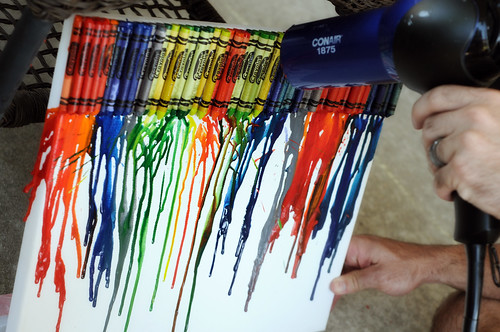
I’ve been sick and in bed a lot (Florida’s motto should be The Pollen State) and dreaming of everything I want to do when I’m feeling better. You know, practical, productive activities like cleaning my house, making dinner for my kids, and organizing my desk.
I kid! I’ve actually been dreaming of the wonderful and utterly nonessential. Things like making my own sourdough bread and picking a bouquet of teensy flowers for my daughter’s dollhouse. Oh, and writing out my favorite recipes to fill an antique recipe box. Why? Because it’s prettier than my binder full of recipe clippings, that’s why.
Illness has stripped away my ability to be energetic and efficient, but I am not daydreaming about regaining my productivity. I am daydreaming about Folly.
The capital F is important. Do you know about Follies? Those small architectural oddities which dotted the landscapes of eighteenth-century British aristocrats? If you’ve seen the latest film version of Pride and Prejudice you know what I’m referring to. Elizabeth and Darcy exchange words when they take shelter from the rain in a miniature reproduction of a Greek temple. That is a Folly with a capital F.
It serves no purpose. It has no point. It is as if those who built them said, “I am going to create something beautiful. And, then, I am going to look at it.” That is all.
We can easily criticize the Folly (and the one who built it) for its ridiculousness. Its wasteful extravagance. What is the point? What does it do? Aren’t there better uses for your time? Your money? Your life?
I have no desire to defend those eighteenth-century aristocrats. Is it a coincidence that this century ended in revolution or the threat of it all around the globe? Probably not.
Lying in my sickbed, however, I find a lot to like about the idea of Folly with a capital F. Folly, as it appeals to me, has more to do with beauty than foolishness. It means acknowledging that life is not Life if it is all efficiency, productivity, and utility. It must also make room for beauty, creativity, whimsy, and delight.
For homemade sourdough bread. For handwritten recipe cards. For tiny tabletop bouquets bestowed on a family of dolls.
For art.
For music.
For dance.
For embracing the Creator in whose image we are made.
“How priceless is your unfailing love, O God!
People take refuge in the shadow of your wings.
They feast on the abundance of your house;
you give them drink from your river of delights.
For with you is the fountain of life;
in your light we see light.”
(Psalm 36:7-9)
I’d love to know: what is bringing you delight during these late winter days?
by Christie Purifoy | Dec 17, 2011 | Advent, Art, Jesus, Music

O come, Thou Key of David, come,
And open wide our heavenly home;
Make safe the way that leads on high,
And close the path to misery.
Rejoice! Rejoice! Emmanuel
Shall come to thee, O Israel.
O come, O come, Thou Lord of might,
Who to Thy tribes, on Sinai’s height,
In ancient times did’st give the Law,
In cloud, and majesty and awe.
Rejoice! Rejoice! Emmanuel
Shall come to thee, O Israel.
O come, O come, Emmanuel
And ransom captive Israel
That mourns in lonely exile here
Until the Son of God appear
Rejoice! Rejoice! Emmanuel
Shall come to thee, O Israel.
by Christie Purifoy | Oct 17, 2011 | Art, Books, Poetry
In my ideal Christian bookstore, the Jesus knick-knacks and the Amish romances would be pushed to a far corner. The coveted window display space would be filled with books like the collected poems of Czeslaw Milosz.
I guess if I’m being perfectly honest, my ideal Christian bookstore would look exactly like my favorite independent bookstore in Chicago’s Hyde Park neighborhood, with a few more Bibles. As Madeleine L’Engle writes in Walking On Water, “Christian art? Art is art; painting is painting; music is music; a story is a story. If it’s bad art, it’s bad religion, no matter how pious the subject.”
Even if you think that L’Engle pushes the point too far, I imagine that many of you, having picked up a copy of Milosz’s New and Collected Poems (1931-2001), would agree that this is a writer Christians should be reading. A believer and a Nobel Prize winner, Milosz never turned his face away from the darkness of twentieth-century history. Yet he did this without losing his grip on hope and belief. A light shining in darkness. I think that may be my definition of Christian art.
Rays of Dazzling Light
Light off metal shaken,
Lucid dew of heaven,
Bless each and every one
To whom the earth is given.
Its essence was always hidden
Behind a distant curtain.
We chased it all our lives
Bidden and unbidden.
Knowing the hunt would end,
That then what had been rent
Would be at last made whole:
Poor body and the soul.
– Czeslaw Milosz
by Christie Purifoy | Oct 13, 2011 | Art, Books, Family, Stories, Writing

With three talkative children at the table, the ship of dinner-time conversation is rarely steered by the adults in our house. Which is surprising given that the youngest is working with a somewhat limited vocabulary. To make up for this handicap, he frequently resorts to loudly repeating a single word with varying intonations. His vocabularly may be small, but he certainly knows what talkative is supposed to sound like.
Recently, I yanked my mind from some daydream or other and recognized that the children were discussing Harry Potter. This, too, is strange, given that not one has finished reading a single book of the series, nor have they seen the films. I recognize, with a bit of sadness, that Harry Potter has joined the company of imaginative figures, untethered from any particular medium, which populate a child’s imagination. Harry Potter, Winnie the Pooh, a Jedi Knight … they’re all hanging out together in my five-year-old’s dreams.
As if trying to get a firmer grasp on all that she doesn’t yet know, the firstborn says, “But Harry Potter isn’t …”, and I gasp. I am suddenly sure that she’s about to say “true.” She doesn’t. Finishing her sentence over my raised eyebrows, she says, “Harry Potter isn’t real, is it Daddy?” He says easily, “No honey, it isn’t real.” And I sigh, grateful I don’t have to intervene.
But if she had said true? That would have been a very different story.
It isn’t simply that I love Harry Potter. I do. Much as I loved Narnia when I was my daughter’s age. But it isn’t love (or delusion, for that matter) that would have caused me such pain to hear my child say, “That story isn’t true.”
Despite what you may now be thinking, I don’t believe there are broom-flying wizards right around the corner. That’s our reality. No broom-flying wizards. I might wish it otherwise, but I accept this.
But true? Not true? To me, at least, those words suggest something very different from what we usually mean when we say “true-life.” No, Harry Potter’s world is not “true-life.” But true? Yes!
Ours is a fallen, not-quite-what-it-was-meant-to-be world, and our reality isn’t always true. At times, it lies. It says this world tends towards chaos, you are on your own, watch out for number one, pursuing goodness is a waste of time.
Stories – at least the excellent ones – give us a glimpse of the world as it was always meant to be. Through the lens of a story, we can see the world as it will be again one day.
Reality? Too often it is a cracked lookingglass. Stories? No matter how fantastical, this is often where we spy the truth.
When Jesus came walking in bare feet to rescue us, he was asked many questions. More often than not, he answered them with stories.
He told us himself that his name was Truth, and he told us stories.
by Christie Purifoy | Oct 10, 2011 | Art, Food, Poetry

This is the first (and best) of all refrigerator poetry. It reminds me that the line between the mess of everyday and the wholeness of art is sometimes very slight. And yet, there is a line. Transforming ordinary raw materials (a pigment, a word) is not as easy as it looks.
If the raw material is depleted or broken, what then? Light from darkness. Beauty from ashes. Is it possible?
Those are cosmic considerations. This … well, this is more like a post-it note turned poem. And yet, when Williams turns the ordinary into something lovely, I perceive a giant’s theology on a dollhouse scale.
This Is Just To Say
I have eaten
the plums
that were in
the icebox
and which
you were probably
saving
for breakfast
Forgive me
they were delicious
so sweet
and so cold
– William Carlos Williams
